

Do You Need Expensive Soil to Start a Garden?
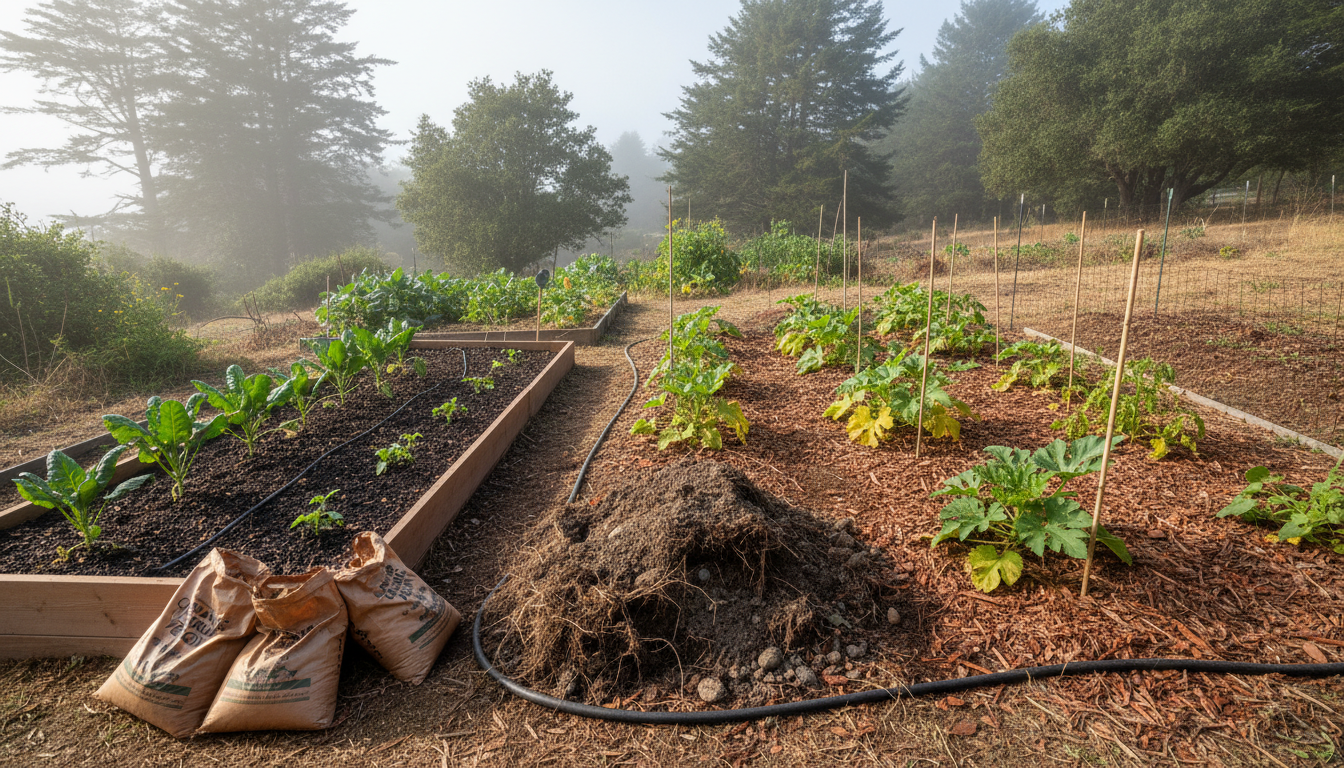
The bags at the garden center can make a first bed feel expensive before you have planted a seed. You do not need the highest-priced soil to begin, but you do need a growing medium suited to the job. An in-ground vegetable bed, a raised bed and a patio pot are three different decisions.
Start by naming that job. Buying less of the right material is more useful than filling a bed with a bargain that does not suit it.
In the ground, find out what you already have
Look at drainage, soil condition and the history of the planting area before deciding to replace soil. A sandy coastal bed and a heavier inland patch will not necessarily need the same treatment. Price and color alone tell you little about how either will grow vegetables.
Oregon State Extension explains how composted organic matter can improve garden soil. Choose the amount for the soil, crop and material rather than adding a thick layer by habit. Where nutrient or pH questions need an answer, use an appropriate soil test.
Do not expect compost to solve every problem. If the site's previous use raises contamination concerns, get advice on appropriate contaminant testing before growing food there. A nutrient test and a darker-looking surface do not establish that an unfamiliar site is suitable for food gardening.
For an ordinary bed that needs improvement, work on a manageable area first. Keep paths separate so you are not repeatedly walking over the soil you have prepared. Protect the surface with a mulch suited to the planting and location.
Fill a raised bed with a suitable mixture
Oregon State’s compost guide describes using excavated native soil with up to 25 percent compost by volume when filling a raised bed. It also discusses suitable purchased mixes. That is guidance for a particular approach, not a requirement that every bagged mix have the same recipe.
Do not fill an ordinary raised vegetable bed with compost alone. It continues to decompose and settle, and it is not a substitute for a suitable complete growing mixture. Ask what a bulk product contains and what use the supplier recommends.
The same guide notes that newly filled beds settle. Allow for that in your plan, but check the bed before adding more each season. Settling does not mean it needs unlimited fresh compost.
A patio pot needs container mix
The soil that works in the ground may compact or drain poorly in a pot. UC Santa Clara recommends potting mix formulated for containers, rather than ordinary garden soil or topsoil as the main medium. Check whether fertilizer is already included before adding another product.
For one or two pots, a bag can be the practical choice. You need not order a delivery or find somewhere to store the remainder of a cubic yard.
Compare the whole purchase
Write down the volume you need before comparing prices. One cubic yard is 27 cubic feet. For example, a hypothetical 4-by-8-foot bed filled 1 foot deep holds 32 cubic feet before allowing for the actual bed shape and existing fill. That example is a calculation, not a prescribed bed depth.
Ask a Santa Cruz County supplier about ingredients, intended use, delivery charges and minimum orders. Compare the delivered quantity with the bagged alternative. Include where a load would be dropped and how you would move it to the bed.
Availability and price change, so check current offerings before making a trip to a landscape yard or public facility. Free tree chips, when suitable, are a surface-mulch option; they are not the same product as finished compost or container mix.
This week: measure one planting area and identify whether it needs amendment, raised-bed fill or potting mix. Then compare two suitable options by total cost and quantity.
Questions at the soil aisle
Is the cheapest material always the best choice?
No. Match the product to the use, then compare cost. A small bag can be better value than paying to deliver more material than you need.
Can I improve my existing soil instead of replacing it?
Often, after checking its condition and suitability. Extension guidance on incorporating organic matter can help you plan appropriate improvement.
Is there one budget recipe for every raised bed?
No. Use raised-bed guidance with the actual soil and compost available. Ask about the mixture rather than assuming a name such as “premium” establishes quality.
Keep your measurements with the planning resources at Your Garden Toolkit.
