

Does More Fertilizer Mean More Fruit?
This guide contains affiliate links. If you buy through one, Ambitious Harvest may earn a commission at no extra cost to you. As an Amazon Associate, we earn from qualifying purchases. Read our full disclosure.
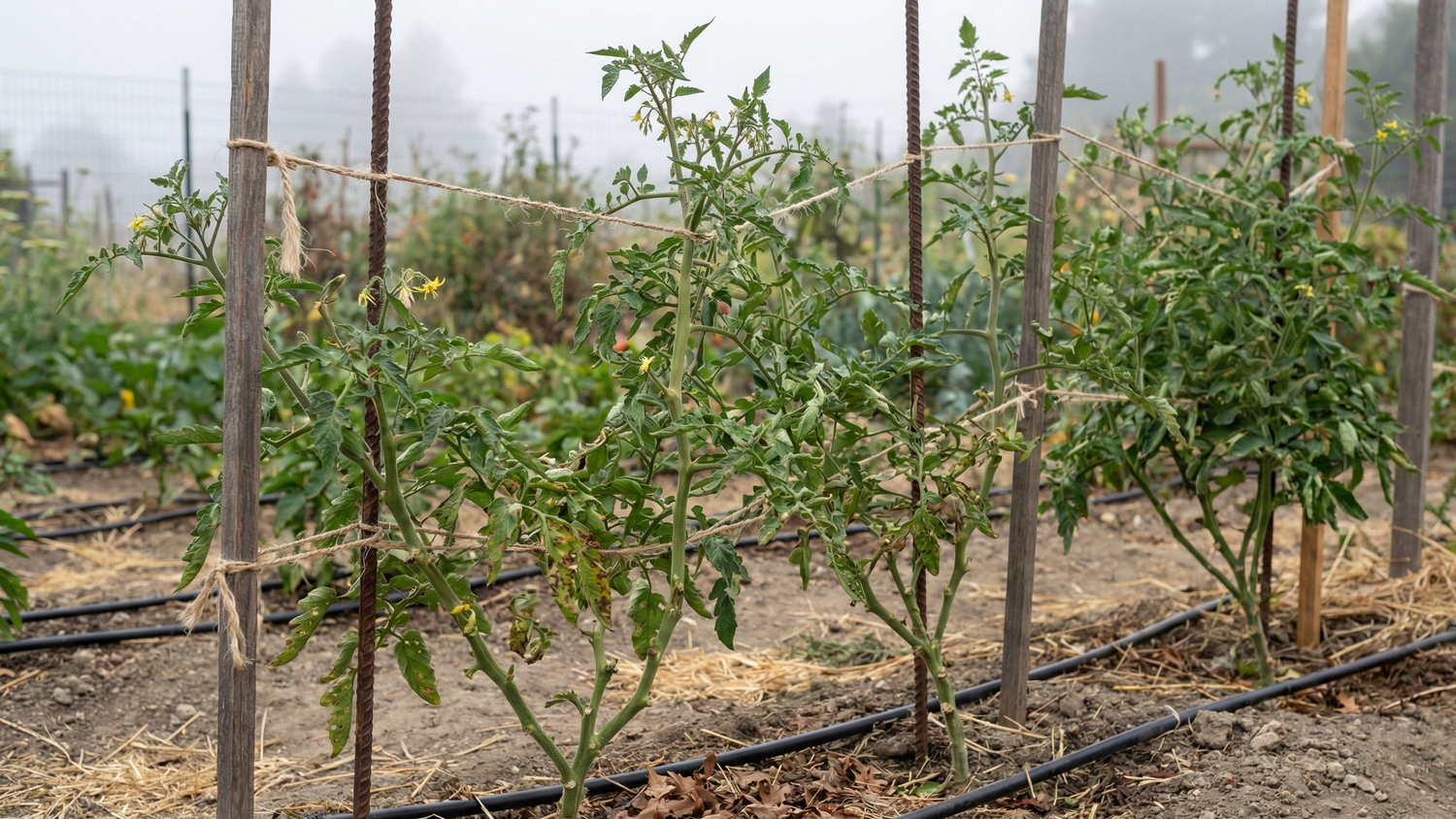
The tomato has plenty of leaves, but the fruit bowl is still empty. Before reaching for another scoop, look at what the plant is already doing. More fertilizer does not automatically mean more fruit. Correcting a nutrient shortage can help; adding nutrients the plant does not need can create a different problem.
Lots of growth is not the same as a harvest
UC Master Gardeners explain that heavy nitrogen applications before tomatoes set fruit can encourage leafy growth and delay flowering and fruit set. Organic and synthetic sources can both supply too much. The word “organic” does not remove the need to measure.
Still, an empty tomato plant is not a nitrogen test. UC Master Gardener guidance on tomatoes not producing also considers light, temperature and other growing conditions. In a cool, shaded Santa Cruz yard, extra fertilizer will not create the missing sunlight. In a hot inland spell, flowers may struggle for a different reason.
Check whether there are flowers, whether they are dropping, and how the plant has been watered and fed. Those details are more useful than deciding that every dark-green plant has excess nitrogen or that every pale plant needs a full dose of fertilizer.
Choose an amount from information, not habit
A laboratory soil test can help with nutrient and pH decisions, provided you choose an appropriate test and follow its sampling instructions. The linked soil-test kit is one product to investigate; check what its analysis and recommendations cover. No test is an explanation for every plant symptom.
Start with the crop, the soil report and the product directions. Measure the actual planted area and account for fertilizer or compost already added. An equal-number or broadly marketed garden fertilizer is not automatically the right balance for your soil. Confirm the exact product and nutrient analysis before buying or applying it.
There is no single planting-time dose and midseason top-up that fits every Santa Cruz vegetable bed, container and fruit crop. Compost nutrient content and availability vary; use crop-specific guidance to decide how it contributes.
Compost counts too
Compost can add organic material and nutrients, but repeated heavy additions can build up salts or nutrients the crop does not need. University of Minnesota Extension describes problems caused by excessive compost and manure, including nutrient accumulation and imbalances. “Natural” is not another word for unlimited.
Keeping surplus nutrients out of runoff and drainage is another reason to apply only what is needed. Avoid leaving fertilizer on paving or where irrigation can carry it away. A written application record makes it easier to avoid adding the same nutrients twice.
This week: write down what you last applied, how much, and where. Read the current label and compare the plan with the crop's needs before adding more. If the plant is not setting fruit, investigate the other causes too.
Questions before another scoop
Can fertilizer ever increase fruit production?
Yes, when nutrients are limiting growth and the application fits the crop. That is different from assuming each additional application will increase the harvest.
Does lush growth prove I over-fertilized?
No. It is a clue to consider alongside your application record, flowering, light and weather. UC Master Gardeners list excess nitrogen among several causes of poor tomato fruit set.
Should I stop using compost?
Not automatically. Use it for an identified soil need and include it in your nutrient planning. If you have added large amounts repeatedly, a suitable soil test is a better next step than another routine layer.
Keep your feeding notes with the planning resources at Your Garden Toolkit.
