

Do Drought-Tolerant Plants Need Zero Water?
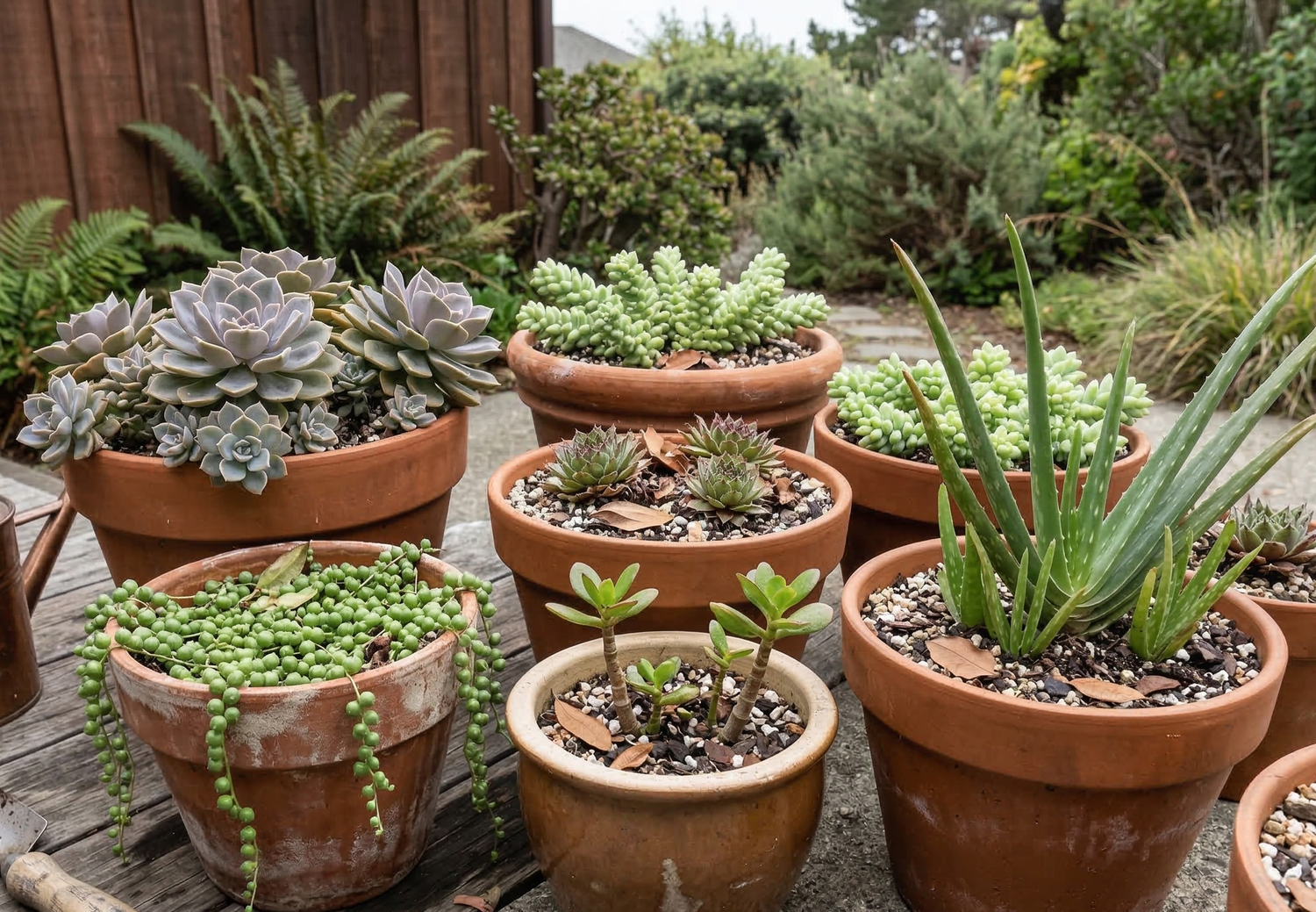
The plant tag says drought-tolerant. Does that mean the hose can go away as soon as the plant goes into the ground? No. A newly planted root ball still needs care, and drought tolerance isn't a universal watering schedule. Some well-sited plants eventually live on rainfall. Others need supplemental water, and some dry-adapted natives can suffer when watered too often in summer.
Read the label as a starting point
“Drought-tolerant” tells you something useful about a plant's ability to handle dry conditions. It doesn't tell you how a particular plant will settle into your soil or respond to an irrigation line beside it.
UC ANR explains the distinction between a plant still establishing and one whose roots have grown beyond the nursery root ball. A small new shrub and an established specimen of the same species don't have the same access to moisture. Treating them alike can undo the benefit of choosing a low-water plant.
Help new roots settle in
During establishment, check the original root ball as well as the surrounding soil. The aim is moisture where the young roots are growing, without keeping the planting soggy. Rain may supply some or all of that water; a dry spell means checking again.
How long this takes varies with the plant, planting season and site. Rather than switching off irrigation on a birthday, look at growth and soil moisture and follow guidance for the species. CNPS's native-plant watering guide distinguishes establishment care from the much lighter watering some established plants need. It also warns about prolonged warm, wet conditions around dry-adapted natives.
Keep the plant's full name when you buy it. Take that name, along with a description of your soil and sun exposure, to a local nursery such as San Lorenzo Garden Center. Ask what changes after establishment and whether the plant tolerates summer irrigation. That's more helpful than asking how often to water “natives” as one group.
Let the plant and the site set the pace
A shaded pocket, a windy slope and a container beside a warm wall can lose moisture differently, even within one Santa Cruz County garden. Drainage matters too. A plant that is struggling in wet soil won't be helped by an automatic extra soak.
UC Marin's irrigation guidance recommends checking soil moisture and grouping plants with similar needs. It also notes that wilting can occur with too much water as well as too little. Use the leaves as a cue to investigate, then check the soil and irrigation before deciding what to do.
Some summer-dry plants naturally look quieter in the dry months. Don't assume that every curled leaf or seasonal leaf drop calls for enough water to make the plant look like it did in spring. Check the expected seasonal behavior of your species.
Make watering decisions easier
- Keep compatible plants together. Put plants needing regular water on a different zone from those that prefer a dry summer.
- Check before changing the timer. Look at moisture around the roots and whether emitters are working, rather than adjusting the whole garden for one unhappy plant.
- Water the root area when needed. A hose running for five minutes doesn't tell you how much water arrived or how deeply it spread.
- Reassess after weather changes. Rain, heat and wind can change the next watering decision. Yesterday's schedule is a starting point to review.
This week: Choose one plant with a drought-tolerant label. Confirm its name, check its soil and find its establishment and summer-watering guidance. That small bit of homework is more useful than giving every plant the same monthly soak.
Find free planning resources at Your Garden Toolkit.
Frequently asked questions
Do drought-tolerant plants need no water once established?
Some can rely on rainfall in a suitable site. Others need supplemental irrigation. The label alone cannot tell you which approach fits, so check the species and local growing conditions.
How long does establishment take?
It varies. New roots need time to grow beyond the nursery root ball, and the pace depends on the plant and conditions. Monitor moisture and follow species-specific guidance rather than assuming a fixed weekly schedule for two years.
How often should I water established natives in summer?
There is no monthly rule for all California natives. Plants from moist habitats differ from those adapted to dry summers. Some can be harmed by frequent summer irrigation, especially in poorly drained soil.
Which plants can go without summer water?
Some locally appropriate, established dry-adapted species can. Buckwheats, manzanitas and ceanothus include different species and cultivars, so check the exact plant rather than applying one rule to the whole group. Rosemary and salvias also deserve their own site-specific watering decisions.
