

Do Crushed Eggshells Protect Plants from Slugs?
This guide contains affiliate links. Purchases through them may earn Ambitious Harvest a commission at no extra cost to you. As an Amazon Associate, we earn from qualifying purchases. Read our full disclosure.
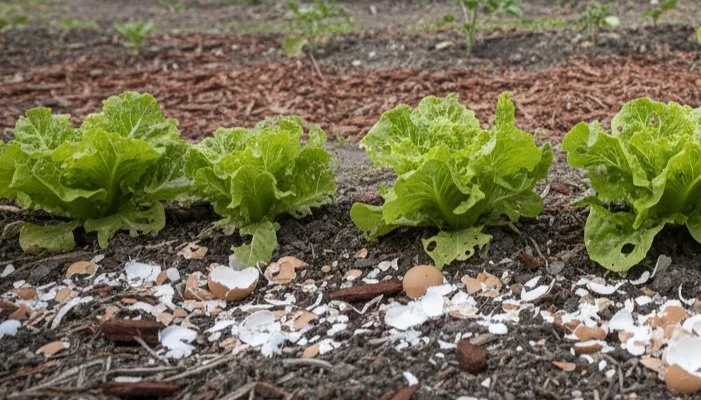
A ring of crushed eggshells looks like a difficult crossing for a soft-bodied slug. It also feels like a good use for breakfast scraps. Don't rely on it to protect your lettuce. A garden trial found that eggshell barriers did not reduce damage, and there are more useful ways to spend the time you're putting into those little white rings.
What the eggshell trial actually found
The Royal Horticultural Society tested crushed eggshells alongside pine bark, copper tape, horticultural grit and wool pellets. Researchers grew 108 lettuces in pots and raised beds, then compared feeding damage after six weeks.
The protected lettuces did not fare better than those without barriers. That's the practical result reported by the RHS. It doesn't establish that every slug crosses every shell without hesitation, or that a finer grind must behave exactly the same. It does give gardeners a reason to stop counting on eggshells as reliable protection.
The test is useful because it measured the outcome you care about: how much lettuce remained. A barrier can look convincing at planting time and still leave you with damaged leaves a few mornings later.
Start with a look after dark
Before choosing a treatment, check who is doing the eating. Take a flashlight to the affected plants at night and look for slugs, snails and silvery trails. Holes alone don't identify the pest.
Once you've found the culprits, hand-pick regularly, wearing gloves, and inspect nearby daytime shelters such as unused pots and loose boards. Concentrate on the crop being damaged rather than clearing every sheltered part of the garden. Check again over the following evenings and track new damage. Keep going as needed rather than expecting a fixed number of visits to solve the problem.
Change the conditions around vulnerable plants
Morning watering gives wet surfaces more time to dry. Drip irrigation can help reduce dampness between plants compared with sprinklers, provided it is placed and adjusted for the crop. It won't keep a rain-soaked or shaded bed dry, so keep watching the actual conditions.
In Santa Cruz County, pay attention after rain and during damp, foggy weather rather than marking a fixed slug season on the calendar. Irrigated beds can offer moist shelter outside the rainy months, too.
If damage continues, Monterey Sluggo snail and slug bait is one possible part of a management plan. The linked listing is a 2.5-pound Sluggo jug bundled with a measuring spoon; check the package for 1% iron phosphate and EPA registration 67702-3-54705. Sluggo Plus and Sluggo Maxx are different formulations. Read the exact product label for the active ingredients, permitted uses, application rate and precautions. An organic listing does not mean a bait is harmless to pets or wildlife. Keep products away from children and pets, and never pile bait into heaps. Use a bait only where the label allows and where the damage warrants it.
Try this tonight: Inspect the lettuce that is being eaten. Note what you find and which nearby spots stay wet or provide shelter. That gives tomorrow's garden work a purpose beyond adding another layer of eggshells.
For free gardening resources, visit Your Garden Toolkit.
Frequently asked questions
Do crushed eggshells actually stop slugs?
They aren't reliable protection. In the Royal Horticultural Society garden trial, eggshell-ringed lettuces suffered no less damage than unprotected plants. Use the condition of your crop to judge control, not the sharp appearance of the shells.
When are slugs worst in Santa Cruz County?
Watch during damp conditions, including wet weather and foggy spells. Moist, sheltered or irrigated spots may support activity at other times. The conditions beside your seedlings matter more than a countywide start and end month.
What actually controls slugs in a coastal garden?
UC IPM recommends combining methods: identify the pests, hand-pick, reduce suitable hiding places and manage moisture. Bait can supplement those steps, but it doesn't replace them. No single change guarantees that the next leaf will be untouched.
Does drip irrigation help with slugs?
It can reduce wet surfaces compared with sprinklers. Check for leaks and avoid watering empty paths, while still meeting the plants' needs. Keep inspecting during rainy periods, when changing the irrigation won't remove the moisture already there.
