Can You Grow a Productive Garden in Shade?
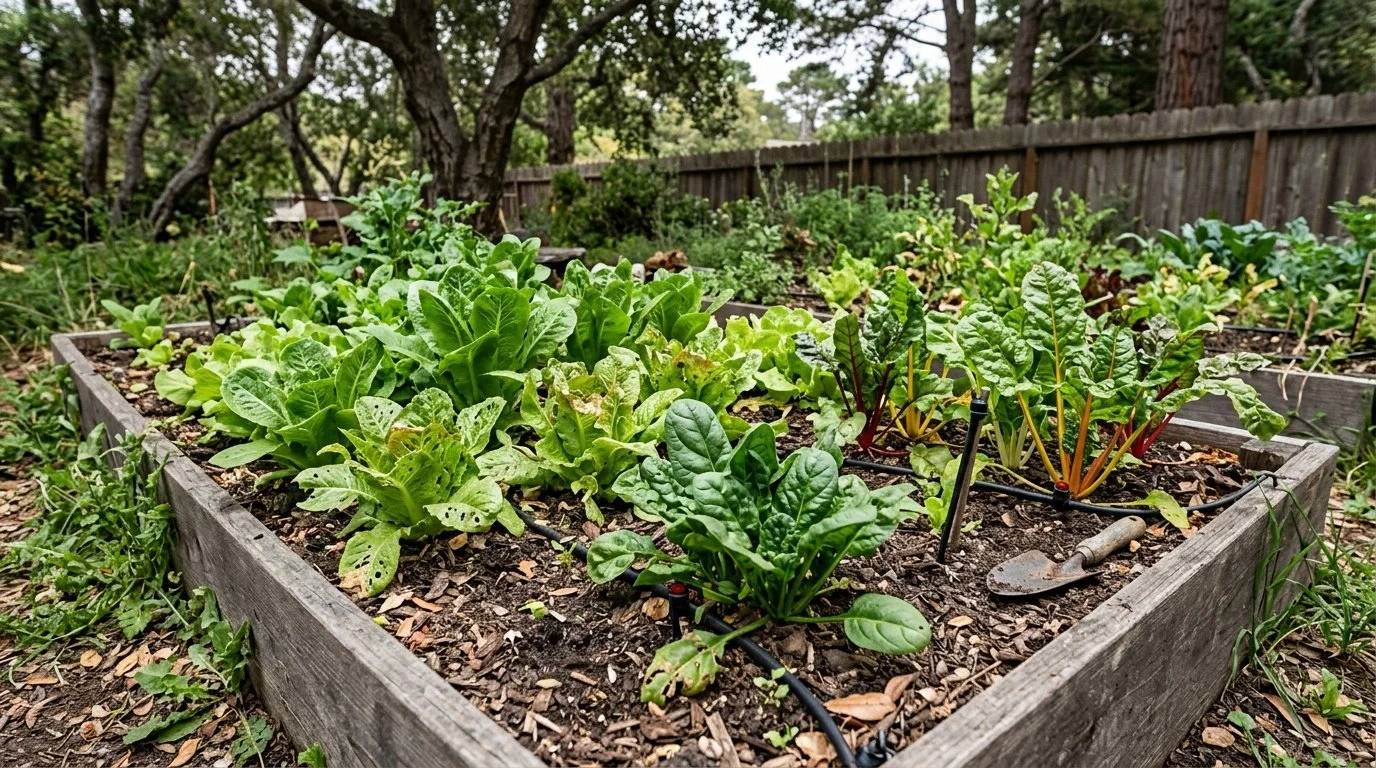
The sunny patch is already taken, and the space left for vegetables sits beside a fence or beneath a tree. It's worth looking more closely before giving up on it. A partly shaded garden can produce food, especially leafy greens. Deep, persistent shade is a different proposition. The useful question is how much light reaches that particular spot during the season you want to grow.
Start with the light you actually have
Watch the proposed bed through a clear day and note when direct sun reaches it. Separate those hours from brief flickers through branches or general brightness. They are not interchangeable measurements. Repeat the check as the season changes: a fence that casts a short summer shadow can shade much more of a winter bed.
In Santa Cruz County, a garden sheltered by redwoods and a coastal yard with an open sky present different growing conditions. Fog can reduce available light even where nothing casts a fixed shadow. Judge the planting space itself rather than choosing crops from a neighborhood's reputation.
Choose a small crop trial
UC Master Gardeners of Placer County suggest leafy vegetables may succeed with roughly three hours of sun, while about four hours makes some root and flowering crops worth trying. Those are starting points, not a promise of a full harvest. Their guidance also notes that greens grown with limited sun may be less robust.
For a first planting, try a modest patch of lettuce, arugula, spinach, kale, or chard in the appropriate season. With somewhat more sun, you could test radishes, beets, or carrots. Reserve the brightest space for tomatoes, peppers, and squash; Placer County's guidance advises against attempting those fruiting crops with less than six hours of sun.
Start small enough that the result teaches you something without committing the whole bed. Record the planting date, light pattern, and what you harvest. If possible, put a second small planting in a brighter spot for comparison. Your own notes will be more useful next season than a blanket label saying “shade tolerant.”
Shade helps with heat, but it does not replace sunlight
On a hot inland site, protection from afternoon sun can be useful for lettuce. UC Master Gardeners of Sacramento County demonstrated summer lettuce growing with a combination of shade, suitable varieties, steady moisture, and other care. Heat and water stress can encourage bolting and bitter leaves; shade was one part of their approach.
That does not make a cool, deeply shaded corner the ideal home for every green. A plant can tolerate less sun without growing better there. Nor should a foggy coastal garden automatically receive more shade just because shade helped a Sacramento summer planting.
Check what is happening below the leaves
Under a tree, limited light may come with competition for water and nutrients. Check soil moisture rather than assuming a shaded bed stays damp. Tree cover can also intercept rain. Adding more water or fertilizer by habit will not solve a shortage of light.
A movable container gives you a way to try a brighter position without committing to an in-ground bed. Keep the experiment manageable, and judge success by the harvest you want. A few useful handfuls of salad leaves can be worthwhile even when the space cannot support a summer tomato crop.
This week: map one possible planting spot, then choose a small seasonal greens trial. For a broader crop list, read our guide to vegetables in partial shade. Our guide to growing lettuce and greens outdoors in a Santa Cruz winter offers a more specific next step for the cool season, and Your Garden Toolkit has garden-planning resources.
Frequently asked questions
Does bright filtered light count as three hours of sun?
Not automatically. Light through a tree canopy varies with its density and the movement of the sun. Treat the hour-based guidance as a starting point for direct sun, then use a small trial to see how the site performs.
Should I try tomatoes in the shady corner?
If a brighter location is available, give it to the tomatoes. A plant surviving is not the same as a plant producing a useful fruit harvest. Greens are a more reasonable first experiment where sunlight is limited.
Will shade keep lettuce from bolting?
It may help reduce heat stress in a hot location, but it does not prevent bolting in every planting. Variety, season, temperature, and moisture still matter.