

Can I Grow Avocados in Santa Cruz County?
A few of the product links in this guide are affiliate links. If you buy through one, Ambitious Harvest may earn a small commission at no extra cost to you, which helps keep these guides free. We only point to gear we would use in our own Santa Cruz garden. As an Amazon Associate, we earn from qualifying purchases. Read our full disclosure.
Can You Actually Grow Avocados in Santa Cruz County?
The short answer: yes, but with caveats. Avocados are a warm-climate crop that thrives in Southern California, and growing them in Santa Cruz County means working within the limits of our cooler, foggier conditions. That said, gardeners in protected coastal and inland microclimates have been growing avocados successfully here for decades. The key is choosing cold-hardy varieties, finding the warmest spot in your yard, and being realistic about what to expect.
Avocados need frost-free conditions (or very close to it), well-draining soil, and consistent moisture without waterlogging. Young trees are especially vulnerable to cold damage, so plan to protect them during their first few winters with frost cloth or strategic placement near south-facing walls that radiate heat overnight.
Best Varieties for Santa Cruz County
Bacon is the most cold-tolerant avocado widely available, handling temperatures down to about 25F once established. It produces a smooth, green-skinned fruit with mild flavor. Fuerte is another good choice for our climate, tolerating temperatures into the high 20s and producing rich, creamy fruit from late fall through spring. Hass, the grocery store standard, is the least cold-tolerant of the three and really only works in the warmest, most sheltered spots along the coast or in sunny inland valleys.
If you are in the San Lorenzo Valley, the mountains, or any area that regularly dips below 28F in winter, avocados are not a practical choice. Focus on other fruit trees better suited to cooler conditions.
Growing Tips for Success
Drainage is the single most important factor. Avocados are extremely sensitive to root rot, especially Phytophthora, which thrives in heavy, waterlogged soils. If your soil is clay-heavy (common in parts of Santa Cruz County), consider planting in a raised mound or large container with well-draining potting mix. A 15- to 25-gallon container works well for the first several years and gives you the option to move the tree to shelter during cold snaps.
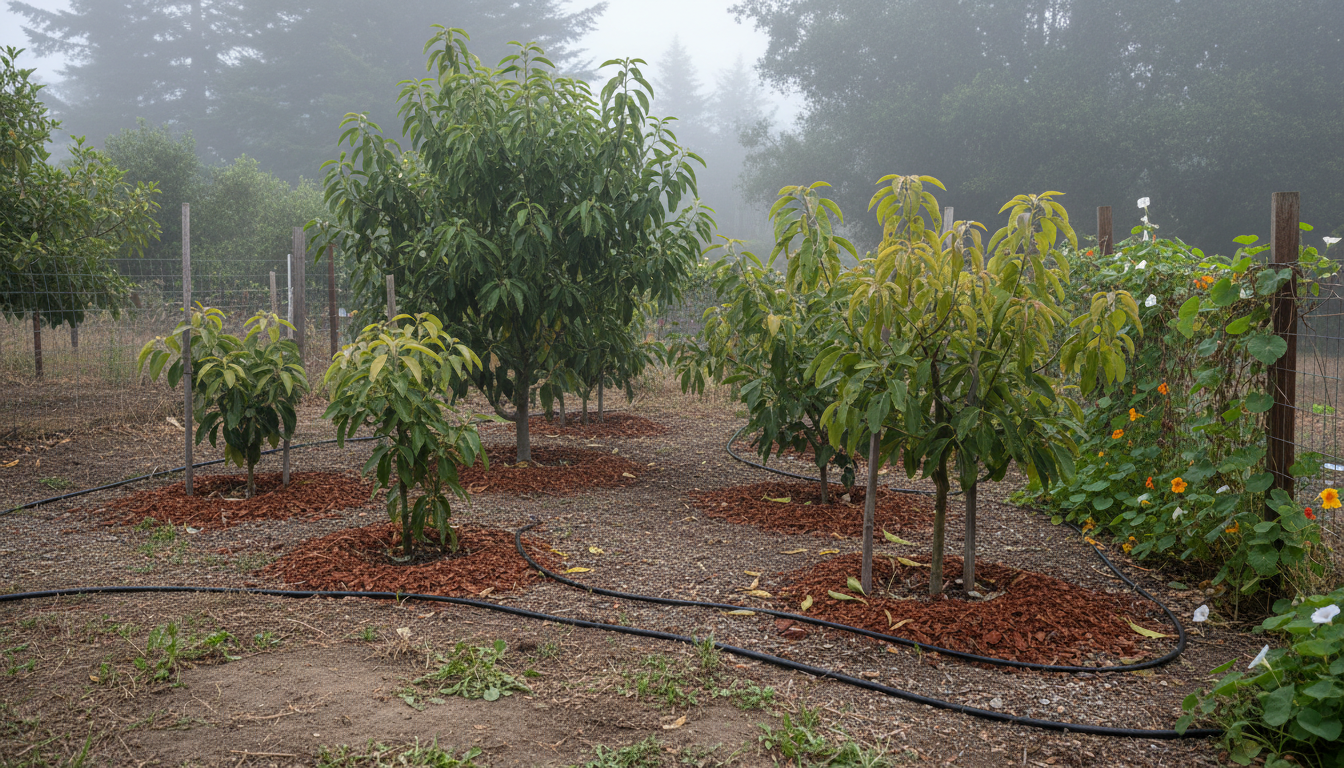
Water deeply but infrequently once established, roughly once or twice a week in summer depending on your soil and microclimate. Avocados have shallow, sensitive roots, so apply a thick layer of mulch (3 to 4 inches of wood chips) but keep it pulled back a few inches from the trunk. Avoid heavy pruning in the first few years. Let the tree develop a full canopy, which helps shade the bark from sunburn.
Keep your expectations realistic: even in ideal conditions, avocado yields in Santa Cruz County will not match what you see in San Diego or the Central Valley. Think of a backyard avocado tree here as a rewarding project that produces a modest seasonal harvest, not a replacement for the grocery store.
Frequently Asked Questions
Which avocado variety has the best chance in our cool, foggy climate?
Bacon is the most cold tolerant choice, handling temperatures down to around 25 degrees, with Fuerte a good second option. Hass is the least cold hardy and only does well in the warmest, most sheltered coastal or inland spots.
Why does drainage matter so much for avocados here?
Drainage is the single most important factor, because avocados sitting in heavy, wet clay are prone to root rot from Phytophthora. Planting in a raised bed or a 15 to 25 gallon container with good drainage gives roots the air they need.
How much fruit should I realistically expect?
Yields in Santa Cruz County will not match what you see in San Diego or the Central Valley, so plan for a modest seasonal harvest rather than heavy production. Protecting young trees with frost cloth through their first few winters improves your long term odds.
