

Best Bean Varieties for Santa Cruz Gardens
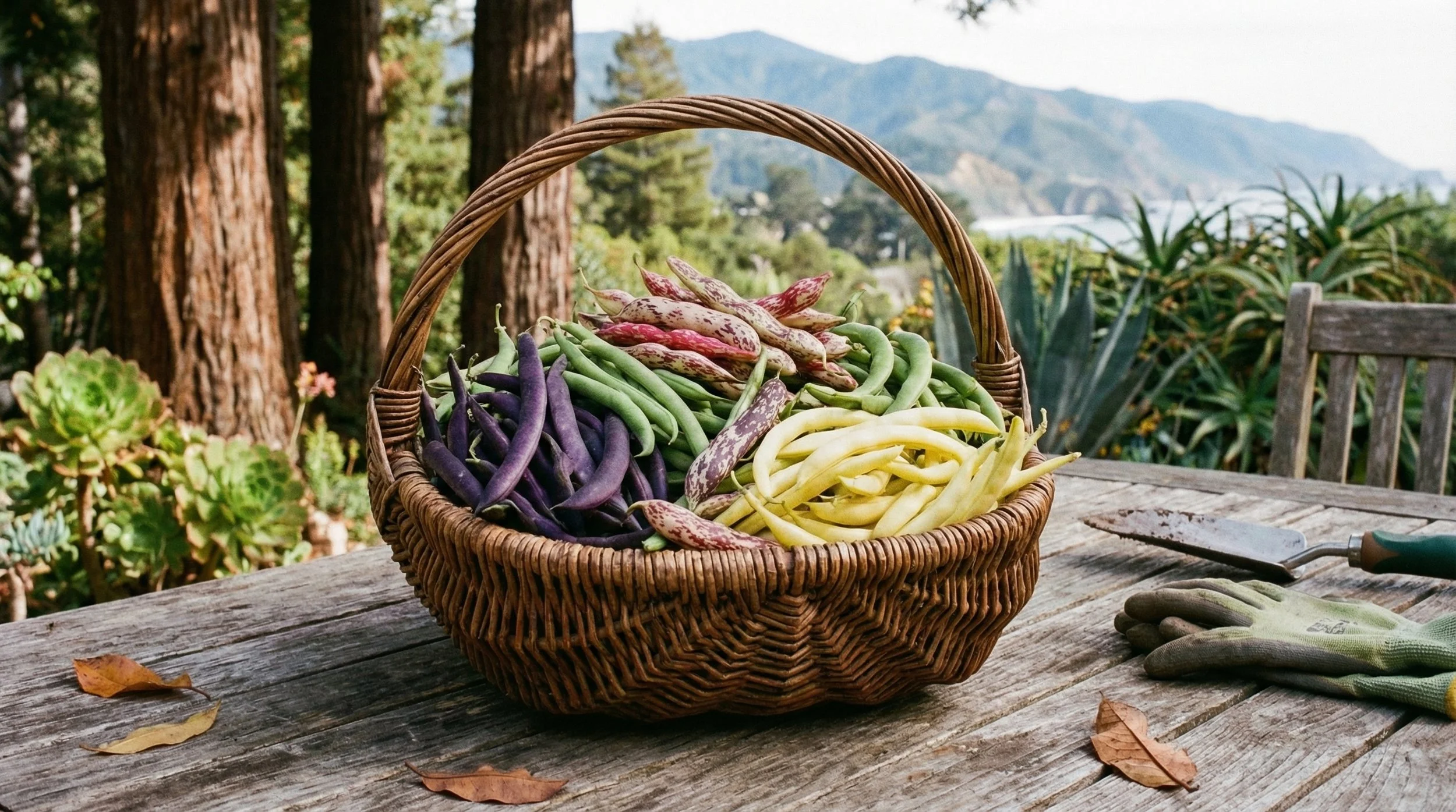
Choosing the right bean varieties makes the difference between a frustrating season and an abundant harvest. Santa Cruz County's unique climate means varieties that thrive in the Central Valley or Southern California may struggle here, while others that falter in heat actually excel in our moderate temperatures.
This guide covers the best bean varieties for each microclimate in Santa Cruz County. You will learn which snap beans produce reliably in foggy coastal conditions, which dry beans actually mature here, and which heirloom varieties are worth growing for flavor that store-bought beans simply cannot match.
Our moderate summers are actually an advantage for bean growing. While gardeners in hotter regions watch their plants shut down production when temperatures soar above 90 degrees F, Santa Cruz beans keep producing through the summer months. The key is selecting varieties suited to our conditions rather than fighting against them.
Understanding Bean Types
Before selecting varieties, it helps to understand the different categories of beans and their uses.
Snap Beans (Green Beans, String Beans): Harvested when pods are young and tender, eaten pod and all. Includes green, yellow (wax), and purple varieties. The most popular type for fresh eating.
Shell Beans (Shelling Beans): Harvested when seeds are fully developed but still moist. Pods are discarded and fresh beans are cooked. Includes cranberry beans, flageolet, and some limas.
Dry Beans: Left on the plant until pods are papery and seeds are hard. Stored dried and rehydrated before cooking. Includes black beans, pintos, navy beans, and many heirlooms.
Filet Beans (Haricot Verts): French-style snap beans harvested very young when pencil-thin. Prized for tender texture and concentrated flavor.
Each type has varieties better suited to different growing conditions and uses.
Best Snap Bean Varieties for Santa Cruz County
Snap beans are the most popular beans for home gardens, and many varieties perform well here. The key factors for our climate are cool-soil germination, production in moderate temperatures, and disease resistance (especially to rust and mosaic viruses common in coastal areas).
Bush Snap Beans
Bush varieties produce a concentrated harvest over 2 to 3 weeks, making them ideal for preserving or succession planting. They need no support and fit well in intensive beds.
'Provider' (50-54 days)
This is the most reliable bean for coastal Santa Cruz gardens. 'Provider' germinates in cooler soil than most beans (as low as 50 degrees F) and produces heavily even in our moderate summer temperatures. The 5-inch green pods are tender and flavorful. Johnny's Selected Seeds notes it is one of the earliest maturing bush beans and tolerates adverse conditions better than most varieties.
Best for: Coastal fog belt, short-season areas, early plantings
'Contender' (50-55 days)
Another early, reliable variety that handles cool conditions. 'Contender' produces 6 to 7-inch round pods that hold well on the plant without becoming tough or stringy. Good disease resistance makes it a strong choice for coastal gardens where humidity promotes fungal issues.
Best for: All microclimates, beginning gardeners
'Blue Lake 274' (54-58 days)
The bush version of the classic Blue Lake pole bean. Produces the same tender, stringless pods with excellent flavor. Plants are compact at about 20 inches and productive. This is a standard variety for canning and freezing.
Best for: Preserving, inland and valley gardens
'Royal Burgundy' (55-60 days)
Beautiful purple pods that turn green when cooked. Beyond the visual appeal, 'Royal Burgundy' handles cooler conditions better than most snap beans and shows good resistance to bean beetles. The purple color also makes pods easy to spot for harvest.
Best for: Coastal gardens, cool conditions, visual interest
'Dragon Tongue' (60 days)
A Dutch wax bean with stunning cream-colored pods streaked with purple. Excellent flavor fresh or as a shelling bean if left to mature. The purple streaks fade when cooked but the tender texture and buttery taste remain.
Best for: Fresh eating, dual-purpose (snap or shell)
Pole Snap Beans
Pole beans produce over a longer season (8 to 10 weeks) and yield more per square foot than bush beans, though they require sturdy support.
'Blue Lake FM-1' (60-65 days)
The classic pole bean and still one of the best for flavor. Produces 6-inch stringless pods over a long harvest period. Vigorous vines need sturdy 8-foot support. It was bred for the Pacific Northwest canning trade, and those conditions closely match coastal Santa Cruz.
Best for: All microclimates, fresh eating and preserving
'Kentucky Wonder' (65-70 days)
An heirloom dating to the 1850s that remains popular for good reason. Long (8 to 9 inch), slightly curved pods with excellent old-fashioned bean flavor. Some strings develop if pods are not picked promptly. Vigorous producer even in less-than-ideal conditions.
Best for: Flavor enthusiasts, inland gardens
'Fortex' (60-70 days)
French filet-type pole bean that produces incredibly long (11-inch) slender pods. Harvest young for tender haricot verts or let develop for fuller snap beans. Vigorous vines with excellent production. This is the variety to grow if you love filet beans.
Best for: Gourmet cooking, long harvest window
'Rattlesnake' (73 days)
Heirloom with distinctive purple-streaked pods and seeds. Tolerates heat and performs well in warmer microclimates like Pajaro Valley and inland valleys. Good flavor fresh and can be used as a dry bean if left to mature.
Best for: Warmer microclimates, dual-purpose growing
Wax Bean Varieties
Yellow wax beans add visual variety and often have a milder, slightly sweeter flavor than green beans.
'Rocdor' (53 days)
The best wax bean for coastal conditions. 'Rocdor' produces bright yellow, 6-inch pods on compact bush plants. Good disease resistance and reliable production in cool weather. Tender with excellent flavor.
Best for: Coastal fog belt, cool conditions
'Golden Wax' (50-55 days)
Classic heirloom wax bean that remains popular for its buttery flavor and reliable production. Compact plants produce 5-inch flat pods. Some strings develop in older pods, so harvest regularly.
Best for: All microclimates, traditional flavor
Best Dry Bean Varieties for Santa Cruz County
Dry beans are more challenging in coastal Santa Cruz because pods must dry completely on the plant before harvest. Coastal fog and fall moisture can interfere with drying, leading to mold and sprouting. However, with variety selection and timing, dry beans are possible here.
Dry Bean Success Tips for Our Climate
Choose early-maturing varieties (under 90 days) to ensure plants complete their cycle before fall moisture arrives. Plant early (late April to May in warmer microclimates) to maximize the dry season. In coastal areas, be prepared to harvest whole plants and hang them in a covered spot to complete drying if fog threatens.
'Black Coco' (75-85 days)
A relatively early black bean that produces well in moderate conditions. Rich, chocolatey flavor surpasses standard black beans. Compact bush plants make harvesting and drying management easier than pole types.
Best for: Inland valleys, Pajaro Valley, gardeners with covered drying space
'Cannellini' (80-90 days)
Classic Italian white bean with creamy texture. Needs warm conditions to mature, making it best suited to Pajaro Valley and other warm microclimates. Bush habit and determinate ripening help with harvest timing.
Best for: Pajaro Valley, warmest microclimates only
'Hidatsa Red' (85-90 days)
Beautiful red beans from the Hidatsa people of North Dakota. Adapted to short seasons and produces well in moderate temperatures. Excellent keeper with rich, earthy flavor.
Best for: Inland valleys, gardeners seeking heirloom dry beans
'Tiger's Eye' (85-90 days)
Stunning orange and burgundy swirled beans from Chile. Beautiful enough to display, with rich flavor in soups and stews. Requires warm conditions for reliable drying but worth attempting in Pajaro Valley.
Best for: Adventurous gardeners in warm microclimates
The Coastal Fog Belt Dry Bean Alternative
If you garden in coastal Santa Cruz and want to grow beans for drying, consider treating them as fresh shell beans instead. Harvest when pods are fully developed but still slightly pliable, shell the fresh beans, and either cook immediately or freeze. This sidesteps drying challenges entirely while still providing homegrown beans for soups and other dishes.
Shell Bean Varieties
Shell beans (shelling beans) occupy a middle ground between snap and dry beans. You harvest them when seeds are fully developed but still moist and fresh, before pods dry. The fresh beans are cooked immediately or frozen.
'Tongue of Fire' (70-80 days)
Italian heirloom with dramatic red-streaked pods and seeds. Excellent as both snap bean (picked young) and shell bean (picked mature). The cream-and-red beans have wonderful flavor in soups and pastas. Reliable producer in our climate.
Best for: All microclimates, versatile cooking
'Flageolet' (70-80 days)
The classic French shell bean used in cassoulet. Small, pale green beans with delicate flavor. Requires consistent moisture but otherwise grows well in coastal conditions.
Best for: Gourmet cooks, coastal gardens
'Cranberry' (Romano type, 70-85 days)
Also called borlotti beans. Large, beautifully streaked beans with rich, nutty flavor. Italian staple that grows well in Santa Cruz. Can also be dried if weather cooperates.
Best for: All microclimates, Italian cooking
Lima Bean Varieties
Limas require more heat than common beans and can be challenging in coastal Santa Cruz. Focus on small-seeded (baby lima) varieties that mature faster and tolerate cooler conditions better than large limas.
'Henderson Bush' (65-75 days)
The most reliable lima for our climate. Small, pale green beans on compact bush plants. Does not require the heat that larger limas need. UC Cooperative Extension notes Henderson tolerates cooler conditions better than other limas.
Best for: Inland valleys, Pajaro Valley
'Fordhook 242' (75-85 days)
Large lima (butterbean) type that needs warm conditions. Only recommended for Pajaro Valley or other warm inland microclimates. Rich, buttery flavor rewards the effort in suitable locations.
Best for: Pajaro Valley only
Variety Selection by Microclimate
Coastal Fog Belt (Westside Santa Cruz, Live Oak, Aptos, Capitola)
Focus on early varieties with good cool-weather performance: 'Provider,' 'Contender,' 'Royal Burgundy,' 'Rocdor' (wax). For pole beans, 'Blue Lake' remains the most reliable. Avoid long-season dry beans and large limas.
San Lorenzo Valley Chaparral (Boulder Creek, Ben Lomond sunny ridges)
More variety flexibility due to warmer conditions. Good success with most snap beans plus moderate dry beans. 'Rattlesnake' and 'Kentucky Wonder' perform well. Can attempt earlier dry bean varieties in sunny spots.
Under Redwoods (Felton, Ben Lomond canyons)
Limited by shade more than temperature. Focus on quick-maturing bush beans ('Provider,' 'Contender') in your sunniest spots. Expect reduced yields compared to full-sun gardens.
Inland Valleys (Scotts Valley, Soquel hills)
Excellent conditions for most bean varieties. Can grow both early and mid-season types, including some dry beans. Good location for growing 'Blue Lake' poles and experimenting with shell beans.
Pajaro Valley (Watsonville)
The warmest microclimate offers the widest variety selection. Can successfully grow dry beans, large limas, and heat-loving types that struggle elsewhere. 'Cannellini' and 'Fordhook 242' limas are possible here.
Where to Find Seeds
Local and regional seed sources often carry varieties selected for our climate:
Renee's Garden: Based in Felton, their varieties are tested locally. Excellent selection of gourmet bean varieties.
Territorial Seed Company: Oregon-based with varieties suited to Pacific Northwest and Northern California conditions.
Johnny's Selected Seeds: Excellent variety descriptions and growing information. Strong selection of commercial and home garden varieties.
Local Nurseries: San Lorenzo Garden Center and Mountain Feed & Farm Supply in Ben Lomond often carry locally-appropriate bean seeds in season.
Where to get seeds: For varieties that do well in our climate, we like Seeds Now, a California company selling non-GMO, open-pollinated, and heirloom seed. (Affiliate link, see our disclosure.)
Frequently Asked Questions
Which bean variety should I start with if I am a beginner?
'Provider' is the most forgiving bean for Santa Cruz gardens. It germinates in cooler soil than other varieties, produces reliably in our moderate temperatures, and has good disease resistance. Plant it in May or June for a nearly guaranteed harvest.
Can I grow dry beans in coastal Santa Cruz?
Dry beans are challenging because pods must dry completely before fall moisture arrives. Early varieties (under 85 days) planted in early May have the best chance. Be prepared to harvest whole plants and hang them in a covered spot to finish drying if fog threatens before pods are crisp.
Why do my beans flower but not produce pods?
Several factors can cause blossom drop: temperatures above 90 degrees F (rare here but possible inland), temperatures below 55 degrees F at night (common early in the season), water stress during flowering, or excessive nitrogen fertilizer promoting foliage over pods. Ensure consistent watering during flowering and wait for warmer weather if nights are cold.
Are purple beans just for looks or do they taste different?
Purple varieties like 'Royal Burgundy' and 'Dragon Tongue' have excellent flavor comparable to green beans. The purple color fades to green when cooked, but the taste and texture remain. Purple varieties often have better cold tolerance, making them especially useful for coastal gardens.
How do pole beans compare to bush beans for total harvest?
Pole beans produce more total yield per plant over a longer period (8 to 10 weeks vs. 2 to 3 weeks for bush). However, they require support structures. Bush beans work better for preserving (concentrated harvest) or succession planting for continuous fresh eating.
What causes rust spots on my bean leaves?
Bean rust is a fungal disease common in humid coastal conditions. Prevent it by spacing plants for good air circulation, watering at soil level rather than overhead, and removing affected leaves promptly. Resistant varieties like 'Provider' and 'Contender' help reduce problems.
Can I save seeds from my beans to plant next year?
Yes, beans are excellent for seed saving because they are self-pollinating and rarely cross with other varieties. Let pods dry completely on the plant, harvest, and store in a cool, dry place. Seeds remain viable for 3 to 4 years. See our guide to Saving Bean and Pea Seeds for complete instructions.
Free Resources
Download these helpful guides from Your Garden Toolkit:
Seasonal Planting Calendar: Month-by-month planting guide including optimal bean timing for each microclimate.
Companion Planting Guide: Learn which crops grow well alongside beans.
