

Common Yarrow: A Great California Native to Grow
A few of the product links in this guide are affiliate links. If you buy through one, Ambitious Harvest may earn a small commission at no extra cost to you, which helps keep these guides free. Read our full disclosure.
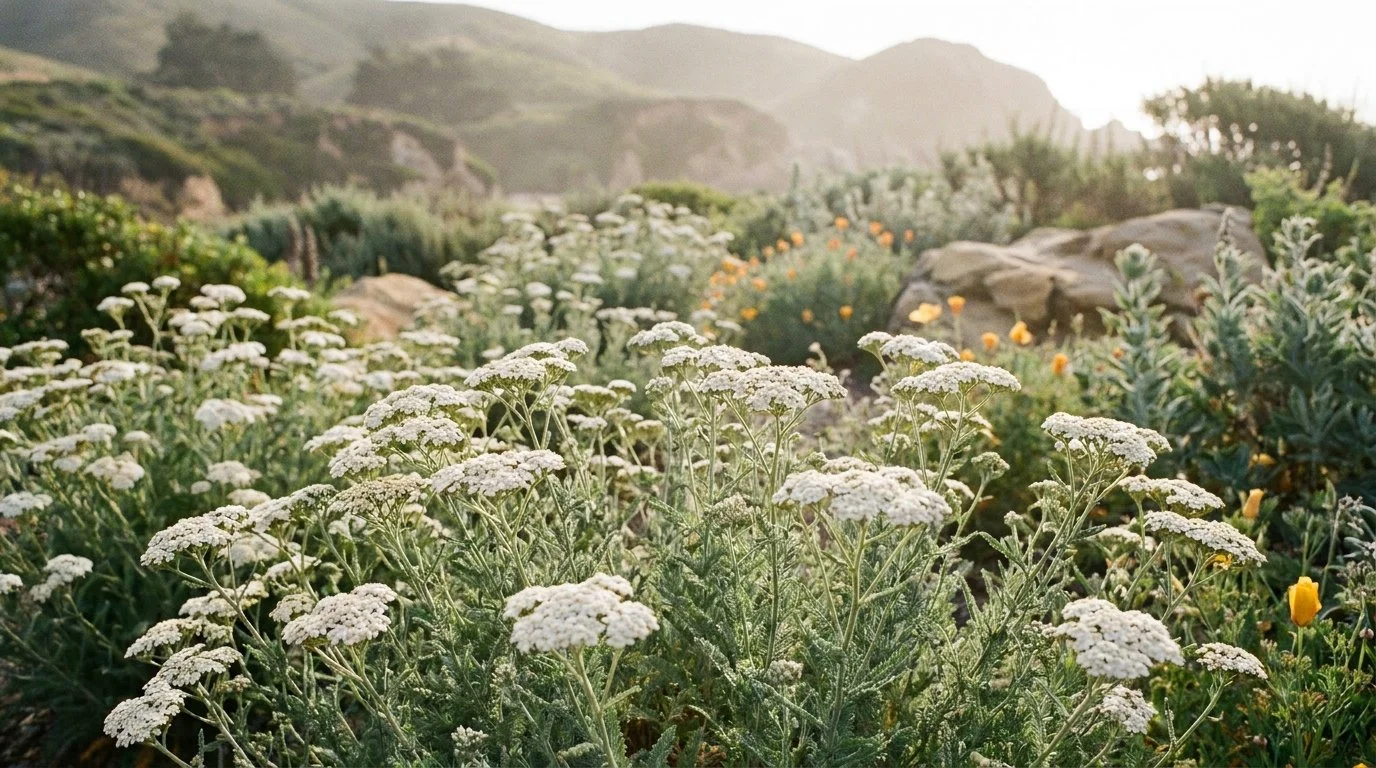
If you want one native plant that will grow almost anywhere in Santa Cruz County, common yarrow is the place to start. Achillea millefolium is the most adaptable native we have, at home in the coastal fog, the inland valley heat, and the cooler San Lorenzo Valley and mountains alike. It carries flat white flower clusters above soft, ferny, gray-green foliage from late spring well into fall, and it asks for very little water in return. For a beginner who wants a plant that simply works, this is the one.
Yarrow is also genuinely useful. Because it tolerates mowing and light foot traffic, it is one of the best low-water alternatives to a traditional lawn, and it binds soil on slopes and banks while feeding bees and beneficial insects all summer. Few plants do this much for so little.
The true native is the plain white-flowered form. The cheerful yellow, pink, red, and terracotta yarrows you see at the garden center are cultivars and color blends, not the straight California native. They are lovely garden plants, but if your goal is supporting local wildlife with a true native, look for the white species. We come back to this below.
Why Should I Grow Yarrow in Santa Cruz County?
The first reason is sheer adaptability. According to Calscape, the California Native Plant Society's plant guide, common yarrow grows across an enormous range of conditions, and it is native right here, with well over a hundred records logged across Santa Cruz County. It is the rare native that does not fuss about which of our microclimates it lands in.
The second reason is how little it asks. Once established, yarrow runs on almost no summer water, shrugs off lean soil, and is largely left alone by deer, which makes it a real confidence-builder for new gardeners.
The third reason is the wildlife. Yarrow is a strong generalist pollinator plant, and its flat flower heads are an easy landing pad for native bees, butterflies, hoverflies, and the tiny parasitic wasps that quietly keep garden pests in check. It also feeds caterpillars, which we detail below.
The fourth reason is versatility. The same plant works as a soft flowering groundcover, a mowable lawn substitute, or erosion control on a bank. That is a lot of jobs for one tough, photogenic native.
Where Does Yarrow Grow Best?
The short answer is almost anywhere, which is exactly what sets yarrow apart. It handles all three of our main microclimates well.
In the coastal fog belt, yarrow takes the cool, humid air in stride where many drier-climate natives sulk. Give it the sunniest spot you have and it will bloom reliably.
In the inland valley and banana-belt pockets, including the Pajaro Valley and warmer neighborhoods around Scotts Valley, it shrugs off the heat and the long dry summer, given occasional deep water its first year.
In the cooler San Lorenzo Valley and mountain gardens, it is equally at home, and its tolerance for a range of soils makes it useful on slopes and disturbed ground.
The one condition yarrow does not love is constant moisture. It wants full sun to part shade and soil that drains. The key thing to understand is that rich, regularly irrigated beds make it grow faster and spread harder, which is usually the opposite of what you want. Lean and dry keeps it in bounds.
How Do You Plant and Grow Yarrow?
Fall is the ideal planting time in California. Setting plants out from October through early winter lets the roots establish during the rainy season so they sail through their first dry summer. Yarrow also starts easily from seed sown in fall or early spring, and it spreads on its own once it settles in.
Follow these steps for a strong start:
Choose sun. Aim for full sun to light part shade. More sun means sturdier growth and better bloom; deep shade makes yarrow floppy and sparse.
Keep the soil lean. Yarrow performs best in poor to average soil. Skip the heavy compost and fertilizer, which only push soft, aggressive growth.
Give it drainage. Any soil that is not waterlogged will do. On heavy clay, a slightly raised bed or slope helps.
Decide on lawn versus border. For a lawn alternative, plant plugs close together, roughly six to twelve inches apart, and let them knit into a mat. For a border, space them wider and let them fill in.
Water to establish, then back off. Soak plants at planting and water deeply but occasionally through the first dry season. After that, very little is needed.
Plan for spread. Yarrow travels by underground rhizomes. Decide up front whether you want it to roam (a bank or meadow) or stay put (a defined bed), and read the containment notes below.
How Do You Care for Yarrow?
Established yarrow is close to self-sufficient. Yarrow is a drought-tolerant, easy-care plant that thrives on neglect, and that matches how it behaves in our county. Your main job is restraint.
For watering, less is more. After the first year, a deep soak every few weeks during the hottest stretch is plenty, and many established plantings get by on winter rain alone, especially inland. Skip the fertilizer entirely, since feeding only encourages floppy growth and faster spreading. Overwatering and rich soil do not kill yarrow so much as turn it into a thug, so keep it lean.
For grooming, shear or deadhead the spent flower heads to tidy the planting and often coax a second flush of bloom. As a lawn alternative, simply mow it a few times a season to keep it low and even. It is evergreen to semi-deciduous here, holding its foliage through most of the year and thinning a little in the coldest, wettest stretch before flushing back in spring.
What Pollinators Does Yarrow Support?
This is where yarrow quietly outperforms its plain looks. Its broad, flat flower clusters work like open tables, easy for short-tongued native bees, butterflies, hoverflies, and parasitic wasps to land on and feed. Those last two matter for any food gardener, because hoverfly larvae and parasitic wasps are natural enemies of aphids. A patch of yarrow near the vegetable beds is a working part of your pest-control crew, not just decoration.
Yarrow is also a larval host, meaning it feeds caterpillars and not only adult insects. Calscape credits common yarrow with hosting a handful of confirmed butterfly and moth species and likely supporting around ten more, so it earns real habitat value beyond the nectar. One thing it is not is a hummingbird plant. Its flat, shallow flowers are built for insects, not for hummingbird bills, so plant it for the bees and the beneficials.
Common Problems with Yarrow
Yarrow has very few pests or diseases. Its real challenges are about vigor, so let us handle them directly.
It spreads, sometimes aggressively. Yarrow travels by underground rhizomes and reseeds freely. Calscape notes plainly that yarrow spreads by rhizomes and can become invasive, and in practice the wetter and richer your bed, the harder it pushes. This is a feature on a bank you want covered and a headache in a tidy border. To keep it in bounds, give it lean, dry, sunny conditions, edge the planting, deadhead before it sets seed if you do not want volunteers, and divide it every few years to refresh it and pull it back.
Flopping in shade or rich soil. A yarrow that sprawls open and blooms poorly is usually getting too much shade, too much water, or too much fertilizer. More sun and leaner conditions firm it back up.
It is mildly toxic to pets. Worth flagging: yarrow is generally listed as mildly toxic to cats, dogs, and horses if eaten in quantity, and the ASPCA maintains the authoritative reference on plant toxicity for animals. Most pets ignore it and the risk is low, but if you have a pet that grazes on plants, check the current ASPCA listing and talk to your veterinarian before planting. We mention it so you can choose with eyes open, not to scare you off.
Where Can You Buy Yarrow in Santa Cruz County?
Common yarrow is widely available, and locally grown native plants tend to establish best. Check independent garden centers and native specialty growers around Santa Cruz, Watsonville, and the San Lorenzo Valley, and watch for the seasonal native plant sales hosted by the local chapter of the California Native Plant Society, usually in fall. When you shop, ask specifically for the white-flowered species form if you want the true native.
If you cannot find it locally, mail order is a reliable backup. You can often find yarrow plants and other drought-tolerant native perennials shipped to your door. Yarrow is also easy and inexpensive to start from seed, and a packet of yarrow seed will cover a surprising amount of ground, which makes it a budget-friendly way to plant a lawn alternative or fill a slope. Sow in fall or early spring for the best results.
Frequently Asked Questions About Growing Yarrow
Can I really use yarrow as a lawn alternative?
Yes. Common yarrow tolerates mowing and light foot traffic, so it makes a soft, low-water, walkable groundcover in place of thirsty turf. Plant plugs close together, around six to twelve inches apart, let them knit into a mat, and mow a few times a season. It will not take heavy daily traffic like a sports field, but for a low-use lawn it is an excellent, drought-tolerant swap.
Is yarrow safe to plant around pets?
Yarrow is generally listed as mildly toxic to cats, dogs, and horses if eaten in quantity, though most pets leave it alone and serious problems are uncommon. We are not veterinarians, so if you have a pet that nibbles plants, please verify the current listing on the ASPCA website and check with your veterinarian before planting. For most households it is a low-risk plant.
Will yarrow take over my garden?
It can if you let it. Yarrow spreads by rhizomes and reseeds, and Calscape warns it can become invasive. The fix is lean, dry, sunny conditions, edged or contained beds, deadheading before it sets seed, and dividing it every few years. In a dry meadow or on a bank, that vigor is exactly what you want.
Is the colorful yarrow at the nursery a California native?
Not the straight native. The true Santa Cruz County native is the plain white-flowered common yarrow. The yellow, pink, red, and terracotta yarrows are cultivars and hybrids selected for color. They are good garden plants and still attract pollinators, but for genuine native habitat value, choose the white species form.
