

Narrowleaf Milkweed: Plant the Right Monarch Host
A few of the product links in this guide are affiliate links. If you buy through one, Ambitious Harvest may earn a small commission at no extra cost to you, which helps keep these guides free. Read our full disclosure.
Narrowleaf Milkweed: The Native Plant Monarchs Depend On
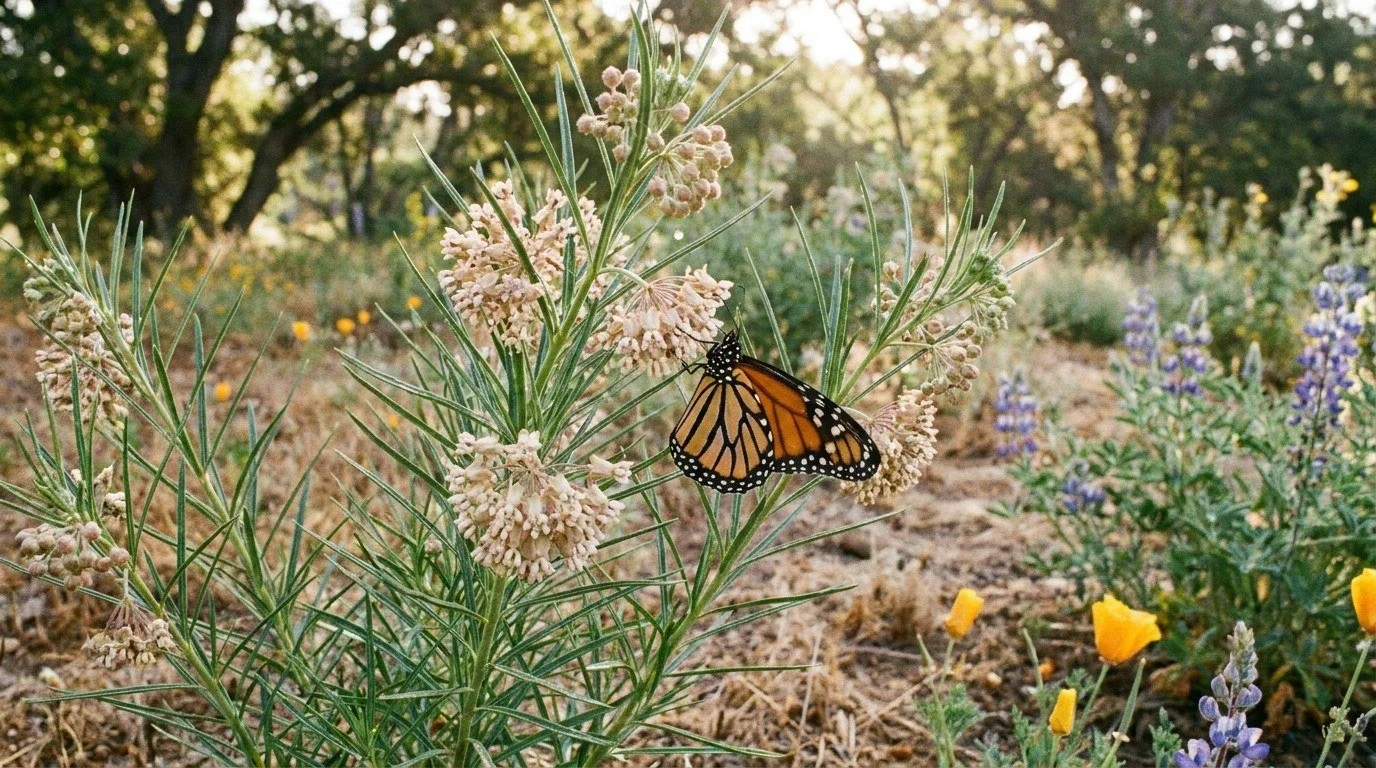
Narrowleaf milkweed (Asclepias fascicularis) is a slender, drought-tolerant California native that grows 2 to 3 feet tall, blooms in soft lavender-and-white clusters through summer, and feeds the one creature most California gardeners want to help: the monarch butterfly. If you have watched the western monarch population shrink and wondered what you could actually do about it, this is the plant. Monarch caterpillars cannot eat anything but milkweed, and narrowleaf milkweed is one of the best-suited species for our part of the state.
For Santa Cruz County gardeners, it offers a rare combination: genuinely useful to wildlife, very low water once established, and native to our region. But there is a catch worth getting right before you buy a single plant, and it comes down to which milkweed you choose.
Why Is Narrowleaf Milkweed Better Than Tropical Milkweed?
This is the most important section here, so we will be direct. The milkweed sold most often at general garden centers is tropical milkweed (Asclepias curassavica), the one with showy red-and-orange flowers. It is pretty and cheap, and in our mild coastal climate it can do real harm to the monarchs it is meant to help.
The problem is that tropical milkweed does not die back in winter the way our natives do. In Santa Cruz County's frost-free pockets it can stay green and blooming year-round. According to the Xerces Society, that causes two problems. A protozoan parasite called OE (Ophryocystis elektroscirrha) builds up on the evergreen leaves over time, so each new generation of caterpillars picks up heavier infections, and high OE loads are linked to weaker, smaller butterflies that migrate poorly. The year-round foliage also encourages monarchs to keep breeding through winter instead of moving to their overwintering groves, leaving them exposed to cold snaps.
Narrowleaf milkweed avoids both problems by doing what a California native should: it dies back to the ground in fall. That seasonal reset clears the parasite load and keeps the migration cues intact. UC ANR and Xerces both recommend narrowleaf and showy milkweed as the natives best suited to the widest range of California conditions. The takeaway is simple: plant the native, skip the tropical. If you already have tropical milkweed, cut it back hard around Thanksgiving and again in February while you establish natives, then phase it out.
One Important Caveat: Keep Milkweed Away From Coastal Overwintering Sites
Before you choose a spot, there is a Santa Cruz County wrinkle that matters as much as picking the right species. The Xerces Society advises gardeners not to plant milkweed of any kind, native species included, within about 5 miles of a monarch overwintering site north of Santa Barbara. Near the mild coast, even native milkweed can escape frost and linger into winter, which can encourage monarchs to breed out of season right where they should be clustering in their groves. Historically, milkweed was largely absent from the immediate California coast for exactly this reason.
This county has several major overwintering groves, including Natural Bridges State Beach, Lighthouse Field and its state beach, and Moran Lake. That puts much of the coastal strip inside the 5-mile zone. If you garden near the coast, the most helpful thing you can do for monarchs is to plant nectar flowers for them instead of milkweed: early-spring, late-fall, and winter-blooming blooms that fuel the adult butterflies. Save narrowleaf milkweed for gardens well inland, away from the overwintering groves, where winter cold still triggers its natural dieback.
Where Does Narrowleaf Milkweed Grow Best in Santa Cruz County?
Once you are clear of that coastal zone, narrowleaf milkweed is one of the most forgiving natives you can grow here, which is why it works across our county's drier, inland microclimates. It turns up naturally in valleys, foothills, and open dry areas throughout California, so it handles a wide spread of soils and sun.
Coastal fog belt (Santa Cruz, the North Coast, Live Oak): Plant here only if you are well outside the 5-mile zone around a monarch overwintering grove (see the caveat above). Within that zone, grow nectar plants for monarchs instead. Where milkweed is appropriate, give it the sunniest spot you can offer; cool, gray summers slow it down a little, but the dieback-and-return rhythm still works.
San Lorenzo Valley and inland banana belts: Warmer days and good drainage suit it well, and it blooms more strongly with reliable summer heat.
Pajaro Valley and inland Watsonville: Close to ideal, with full sun, warm summers, and room to spread. It tolerates the valley's heavier clay soils better than most natives.
Wherever you are, give it full sun. Narrowleaf milkweed flowers and supports caterpillars best when it is not shaded by larger shrubs.
How Do You Plant Narrowleaf Milkweed?
You can start narrowleaf milkweed from a nursery plant or from seed. Plants give a faster result and are easiest for most gardeners. Seed is cheaper, lets you grow a larger patch, and is satisfying if you are patient.
From a plant: Fall is the best planting season here, giving roots the cool, damp months to settle in before summer. Choose a sunny, well-drained spot, dig a hole the same depth as the pot, set the plant so the crown sits at soil level, backfill, and water it in. Space plants 1 to 2 feet apart, or let several grow into a loose clump, which monarchs actually prefer.
From seed: The Theodore Payne Foundation notes that California native milkweeds germinate readily with no special treatment required. Sow about a quarter to a half inch deep in a fast-draining mix, keep the surface lightly moist, and expect sprouts in one to two weeks once the soil is warm. Milkweed loves heat, so seedlings really get going in late spring.
That said, cold stratification does not hurt and can improve germination, which is why fall and winter sowing works so well outdoors: the cool, damp season mimics the chill seeds get in nature. For spring indoor sowing, you can refrigerate the moistened seeds in a bag for three to four weeks first. It is helpful, not mandatory.
How Do You Care for Narrowleaf Milkweed?
The hardest part of growing this plant is resisting the urge to fuss over it. Once established, it is genuinely low-maintenance.
Water: Per Calscape, it needs low to very low water. The first summer, water occasionally to help it root in. After that, twice a month or less is plenty, and many established plants get by on rainfall alone.
Soil: It adapts to sandy, loam, or clay soils and a wide pH range. Good drainage is ideal, but it is more tolerant of slow-draining clay than most natives, which is useful in the Pajaro Valley.
Fertilizer: None needed. Rich, heavily fertilized soil produces soft, floppy growth, not better plants.
Pesticides: Never. Any insecticide that touches the leaves can kill monarch caterpillars. This is non-negotiable for a host plant.
About the dieback: In fall, narrowleaf milkweed yellows and collapses to the ground. New gardeners often think they have killed it. You have not. This dormancy is the plant doing its job. Leave the dry stems standing through winter if you can, as they give birds nesting material, then cut them back before new shoots appear in late spring.
What Plants Grow Well with Narrowleaf Milkweed?
Milkweed feeds monarch caterpillars, but adult butterflies need nectar nearby. Pairing it with other California natives turns a single plant into a working monarch waystation, and the companions help hide the gap when the milkweed goes dormant.
California buckwheat (Eriogonum fasciculatum) for long-season nectar and drought tolerance.
Yarrow (Achillea millefolium), an easy, low-water bloomer pollinators love.
California aster and goldenrod for late-season nectar that fuels fall migration.
Coyote mint (Monardella villosa) and California fuchsia for color once the milkweed dies back.
What Are the Common Problems With Narrowleaf Milkweed?
The pest you will almost certainly meet is the bright yellow oleander aphid, which clusters on stems and buds. It looks alarming but rarely kills an established plant, and the same milkweed patch usually draws the aphids' natural enemies (lady beetles, lacewings, and syrphid fly larvae), which bring the numbers down on their own.
The guidance, echoed by Theodore Payne and Xerces, is to leave it alone. Do not spray, even with soap, because monarch eggs and tiny caterpillars are killed alongside the aphids. If an infestation truly bothers you, knock the aphids off with a strong spray of plain water, but only after checking the leaves for monarch eggs first. Patience is almost always the right answer.
Where Can You Buy Narrowleaf Milkweed in Santa Cruz County?
The best local sources are native-focused nurseries, which carry the right species and can confirm it is true Asclepias fascicularis rather than tropical milkweed. Check the Santa Cruz area's native plant nurseries and the seasonal plant sales held by the Santa Cruz County chapter of the California Native Plant Society, which is also a great place to ask growing questions in person. The UC Master Gardeners of Monterey, San Benito and Santa Cruz Counties can point you toward current sources too.
If a local plant is not available, you can also order narrowleaf milkweed plants or grow your own from native milkweed seeds. Whatever the source, confirm the name Asclepias fascicularis on the label, and steer clear of anything sold simply as "milkweed" with red-and-orange tropical flowers.
Frequently Asked Questions About Narrowleaf Milkweed
Is narrowleaf milkweed poisonous to pets or people?
Mildly. Like all milkweeds, it contains cardenolides and a milky sap that can irritate skin and eyes and cause stomach upset if eaten. The bitter sap means pets and children usually avoid it, but plant it away from grazing toddlers and dogs, and wash your hands after handling cut stems.
Why did my milkweed disappear over winter?
It did not die. Narrowleaf milkweed is winter dormant and dies back to the ground every fall, then resprouts in late spring once the soil warms. This is completely normal and is actually one of the reasons it is better for monarchs than evergreen tropical milkweed.
Should I remove the yellow aphids on my milkweed?
Usually no. Oleander aphids look dramatic but rarely harm an established plant, and spraying risks killing monarch eggs and caterpillars. Let lady beetles and lacewings do the work, or rinse the aphids off with plain water only after checking the leaves for monarch eggs.
Should I plant milkweed if I live near the coast?
Probably not. The Xerces Society recommends keeping milkweed at least 5 miles from coastal monarch overwintering sites, and Santa Cruz County has major groves at Natural Bridges State Beach, Lighthouse Field, and Moran Lake. Near the coast, milkweed can stay green into winter and encourage monarchs to breed when they should be resting in their groves. If you live within a few miles of the coast, plant nectar flowers for the adult butterflies instead, and save narrowleaf milkweed for gardens well inland.
When is the best time to plant it in Santa Cruz County?
Fall is ideal. Planting in autumn lets roots establish during the cool, wet months so the plant is ready for its first dry summer. Seed can be sown in fall to take advantage of natural winter chill, or started in spring once you can keep the soil warm.
A Native Worth Planting
Narrowleaf milkweed is one of the few plants where the right choice is both the easy one and the generous one. It asks for sun, a bit of space, and almost no water, and in return it gives California's monarchs exactly what they cannot survive without. Plant the native, skip the tropical, leave the aphids be, and let it go dormant in peace. Do that, and you have built a small piece of the monarch's recovery in your own yard.
