

California Aster: A Late-Season Native to Grow
A few of the product links in this guide are affiliate links. If you buy through one, Ambitious Harvest may earn a small commission at no extra cost to you, which helps keep these guides free. As an Amazon Associate, we earn from qualifying purchases. Read our full disclosure.
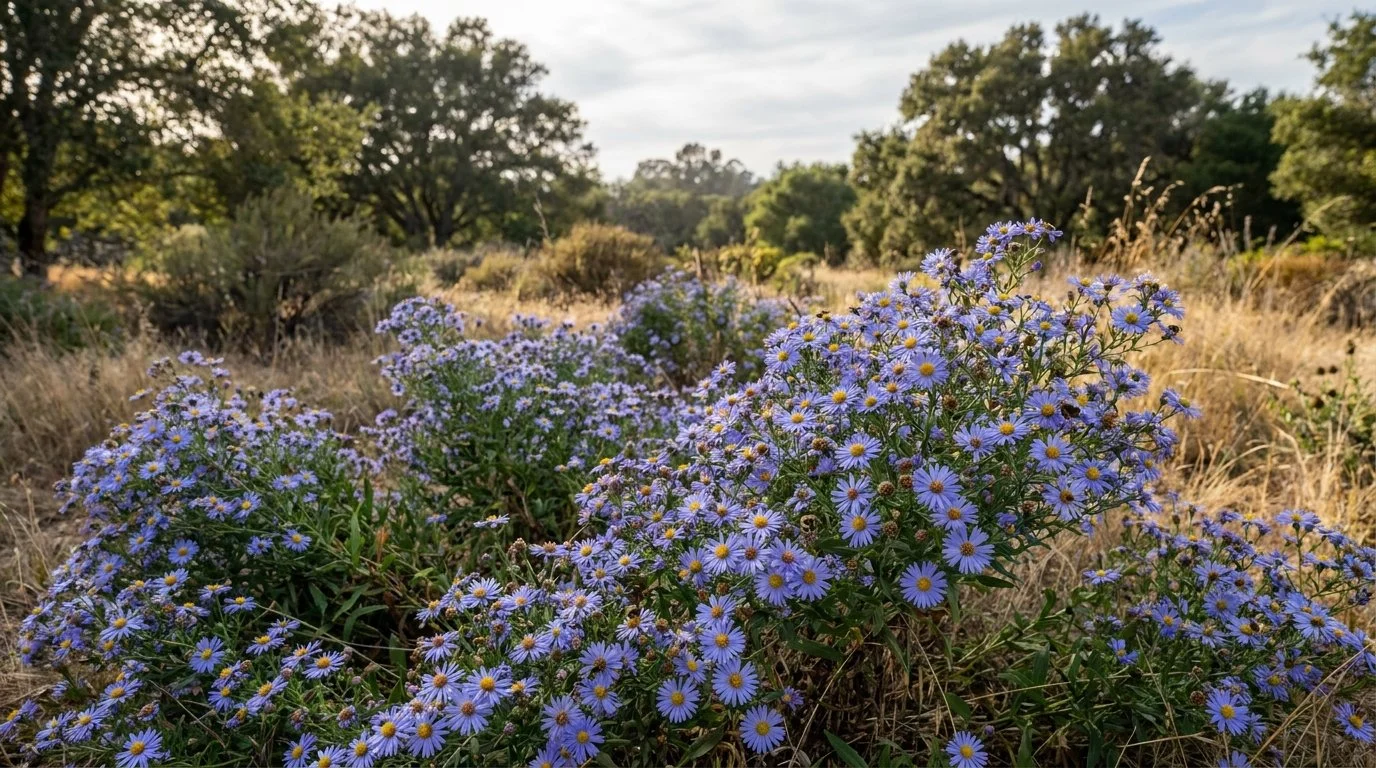
By the time September arrives, most California native gardens have gone quiet. The poppies finished in spring, the sages bloomed in early summer, and the buckwheats are fading to rust. This is exactly when California aster steps forward. Symphyotrichum chilense, often sold as Pacific aster or California aster, opens sprays of soft lavender to blue-violet daisies from midsummer well into fall, offering color and nectar at the precise moment our pollinators need it most.
It is a Santa Cruz County local, found in coastal grasslands, along dune edges, and at the margins of marshes around the bay. That heritage tells you how easygoing it is in a home garden: it tolerates ordinary garden conditions, takes both sun and a little shade, and asks for very little water once established.
One point of confusion to clear up before you shop: "California aster" can point to two different native plants. We will sort that out below so you bring home the right one.
Why Should I Grow California Aster in Santa Cruz County?
The headline reason is timing. California aster is a late-season hero. According to Calscape, the California Native Plant Society's plant guide, it blooms from roughly July through November, a long stretch that bridges the gap between summer and the first winter rains. In a garden built mostly of spring bloomers, that fall color is genuinely valuable.
The second reason is the wildlife it feeds during that window. Late-season nectar is in short supply, and asters are some of the most important fall nectar sources for migrating monarchs and native bees, which is the main reason serious habitat gardeners plant this one.
The third reason is how forgiving it is. This is a tough, low-water perennial that grows happily in our coastal conditions without a lot of fuss. The lavender ray flowers with their cheerful yellow centers are pretty in a relaxed, meadowy way, and they mix beautifully with grasses, goldenrod, and buckwheat.
Which California Aster Should You Plant?
Here is the naming knot, untangled. Two different Santa Cruz County natives both go by "California aster," and they want different things.
Symphyotrichum chilense (Pacific aster) is the one this article features and the better choice for most gardens. It comes from coastal grasslands, dunes, and moist marsh edges, so it is more forgiving of regular garden soil and a little summer water. It carries blue-violet to lavender ray flowers with yellow centers on leafy stems one to three feet tall. If you want a dependable, pollinator-friendly aster for a bed or border, this is the plant to buy.
Corethrogyne filaginifolia (common sandaster) is the dry-slope alternative. It grows on rocky and sandy bluffs and hillsides and, per Calscape, wants sharp drainage and essentially no summer water once established. Its pink to purple daisies sit above distinctive silvery, felted foliage. The popular cultivar 'Silver Carpet' stays low and spreading, which makes it a good groundcover for a hot, unirrigated bank where little else will hold. If you have a baking slope you never water, reach for this one instead.
The simple rule: for a normal garden bed, plant Symphyotrichum chilense. For a dry, sunny slope you want to leave alone, plant Corethrogyne 'Silver Carpet'. Check the botanical name on the label so you get the plant that matches your spot.
Where Does California Aster Grow Best?
Santa Cruz County is really several gardens stacked together, and Symphyotrichum chilense fits across most of them.
In the coastal fog belt, this aster is right at home. It evolved in exactly this kind of cool, marine-influenced grassland, so the fog and mild temperatures suit it well. Give it full sun to light afternoon shade and it blooms reliably into fall.
In the inland valleys, such as the Pajaro Valley and the sunny benches around Scotts Valley, it also performs well, though it may appreciate a bit more water during the hottest stretches than it would near the coast.
In the San Lorenzo Valley and the mountains, look for a clearing or edge with decent light rather than deep forest shade. It naturally grows in open grassland, so the brighter the spot, the happier it will be.
One habit to plan around everywhere: this aster spreads by underground rhizomes. In the right place that is a feature, knitting together into a soft drift. In a tidy small bed it can wander, so site it where it has room or where an edge, a path, or a buried barrier keeps it in bounds.
How Do You Plant and Grow It?
Fall is the ideal planting time across California. Setting plants out from October into early winter lets the roots establish during the rainy season, so they are ready for their first dry summer. Spring planting works too, with a little more watering through that first summer. Follow these steps for a strong start:
Choose sun to part shade. Full sun gives the fullest bloom near the coast. Inland, a touch of afternoon shade is fine and can reduce stress in heat.
Plan for spread. Because it travels by rhizome, give it room to form a drift, or contain it with an edging strip, a path, or a sunken barrier if you want a defined clump.
Keep soil simple. It is not picky about soil and does not need rich amendment. Loosen the planting area, set the crown level with the surrounding grade, and backfill with native soil.
Space generously. Set plants one to two feet apart and let them fill in. A mature stand reaches one to three feet tall.
Water in well. Soak the root ball at planting, then keep the soil lightly moist through the first dry season while roots extend.
How Do You Care for California Aster?
Once established, California aster is close to carefree, which is a big part of its appeal.
Water. This is a low-water plant. In the fog belt, many gardens can carry it on little to no summer irrigation after the first year, while inland gardens may want an occasional deep soak during the hottest weeks. When in doubt, water less.
Winter dieback. California aster is winter-deciduous, meaning it dies back to the ground in the cold months and looks bare or absent through winter. This is normal, and fresh growth returns in spring. Because the plant disappears, mark its spot so you do not dig into it or assume it has died.
Cutting back. After bloom and dieback, cut the old stems to the ground to tidy the bed, or leave the seed heads standing into winter for the birds and clean up in late winter before new growth pushes.
Feeding and containing. Skip the fertilizer; like most natives, it blooms best in lean soil. If the rhizomes roam where you do not want them, slice around the clump with a spade in spring and lift the strays. One pass a year keeps it in check.
What Pollinators Does It Support?
This is where California aster earns its keep. Its late bloom lands at the hungriest time of year for pollinators, and asters are among the most valuable fall nectar plants in our region.
Most notably, Symphyotrichum chilense appears on the Xerces Society's California monarch nectar plant list, which identifies the best plants for fueling monarchs, including the fall generation heading to their overwintering groves along our coast. Santa Cruz County sits right on that migration route, so a patch of aster blooming in October is a real roadside diner for passing monarchs.
A clarification matters here. California aster is a nectar plant for monarchs, not a larval host. Monarch caterpillars eat only milkweed (Asclepias). The aster feeds the adult butterflies energy-rich nectar for their journey, but if you want to support the whole monarch life cycle, pair it with native milkweed for the caterpillars.
Beyond monarchs, the flowers draw a wide range of native bees and other butterflies, and the plant is a larval host for a number of native butterfly and moth species, feeding caterpillars as well as adults. Later, small birds pick over the seed heads. Few plants do this much for local wildlife so late in the year.
Where Can You Buy California Aster in Santa Cruz County?
California aster is sold at California native plant nurseries, and locally grown stock tends to establish best because it is already suited to our conditions. Check independent garden centers and native specialty growers around Santa Cruz, Watsonville, and the San Lorenzo Valley. The best source is often the seasonal native plant sale hosted by the Santa Cruz County chapter of the California Native Plant Society, usually held in fall, which is also the ideal planting season. Buying local also lets you confirm you are getting Symphyotrichum chilense rather than its dry-slope cousin.
If you cannot find plants or seed locally, mail order is a reliable backup. You can sometimes find California aster seeds and plants shipped to your door. When you order, check the botanical name on the listing so you bring home the aster that fits your garden, whether that is Symphyotrichum chilense for a bed or Corethrogyne 'Silver Carpet' for a dry slope.
Frequently Asked Questions About California Aster
Is California aster a host plant for monarch caterpillars?
No. California aster is an important fall nectar source for adult monarchs and appears on the Xerces Society's California monarch nectar plant list, but monarch caterpillars only eat milkweed. Plant aster for the migrating butterflies and add native milkweed if you want to feed the caterpillars too.
What is the difference between the two California asters?
Two natives share the name. Symphyotrichum chilense (Pacific aster) has lavender-blue flowers, tolerates regular garden conditions, and is the better all-around garden plant. Corethrogyne filaginifolia (common sandaster, including the 'Silver Carpet' cultivar) has pink-purple flowers over silvery foliage and wants a dry, sunny, well-drained slope with no summer water. Check the botanical name when you buy.
Why did my California aster disappear in winter?
That is normal. California aster is winter-deciduous, so it dies back to the ground in the cold months and may look like it is gone entirely. New growth returns in spring. Mark its location so you do not dig into the dormant roots by mistake.
Will California aster take over my garden?
It can spread by underground rhizomes, which is wonderful in a meadow planting but can wander in a small tidy bed. Give it room to form a drift, or contain it with an edging strip or a quick pass with a spade each spring to lift any strays.
A Native Worth Growing
California aster fills the season most gardens forget. When the spring color is long gone and the monarchs are moving down our coast toward winter, this easygoing local opens clouds of lavender bloom and sets out nectar for everything that needs it. Give it sun, a little room to spread, and very little water, accept that it rests through winter, and it rewards you with the latest flowers in the native garden. Plant one this fall, ideally beside some milkweed, and watch who shows up.
