

Do Marigolds Actually Repel Garden Pests?
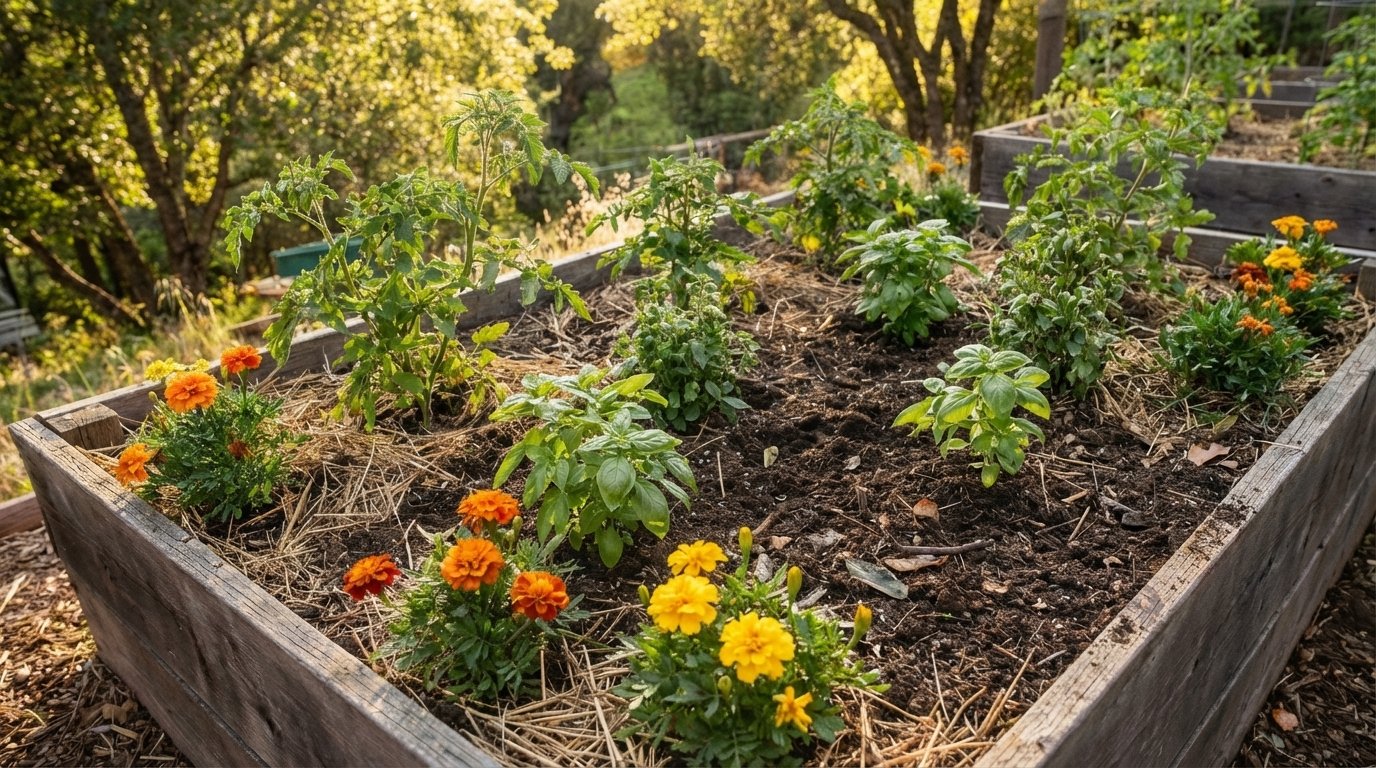
A row of marigolds makes the vegetable bed look cared for. The aphids may not be impressed. Marigolds are not an all-purpose pest barrier. Their useful role in managing some nematodes is much more specific than planting a few flowers beside a tomato.
Keep the flowers if you enjoy them. Just give the job of protecting a crop to observation and a plan suited to the pest you actually have.
A flower border and a nematode treatment are different jobs
UC ANR’s nematode guidance describes suppression by certain marigolds, including French marigolds, with results depending on the nematode and marigold variety. The greatest effect comes from a solid planting grown for an entire season. Interplanting marigolds among vegetables generally gives poor nematode control.
That is a substantial use of bed space, not a quick companion-planting trick. UC also cautions that nematode numbers can increase again when susceptible crops return. Before dedicating a bed to this approach, identify the problem and get advice on a suitable variety and management plan. Do not treat every weak or yellowing plant as evidence of nematodes.
The crop, pest, timing and local conditions need to fit the method. If you are planning a full-season planting, check UC's seed-control guidance too, rather than letting an unwanted seed crop become the next job.
What about the insects on the leaves?
UC IPM’s pest-myth review says marigolds do not repel garden pests such as aphids. It also notes that the flowers can attract beneficial insects. Those two statements can both be true: a useful flowering plant is not a protective fence.
In a Santa Cruz vegetable bed, look at the damaged plant first. Are aphids clustered on new growth, or are leaves disappearing overnight? A border of flowers does not identify the feeder. Check the undersides of leaves and return at another time of day if necessary before choosing a response.
Plant for useful insects, then keep watching
A flowering patch can provide food and shelter for natural enemies. UC IPM’s insectary-plant guidance discusses this approach and its limits: benefits vary and can diminish with distance. Sweet alyssum is one option to investigate for a suitable bed edge, rather than a guarantee that aphids will disappear.
Choose plants that fit the available sun, water and mature space. A damp coastal corner and a hot inland bed may need different choices. Leave room to inspect and harvest the vegetables, and avoid unnecessary broad-spectrum sprays that can harm the natural enemies you hoped to support.
This week: inspect one damaged plant and identify what is feeding before adding another companion plant. If you want flowers as well, choose them for the conditions and watch which insects visit.
Common questions about the marigold border
Should I pull out marigolds already growing beside vegetables?
Not simply because they are not a pest shield. Keep them where they fit and you enjoy them. Make room if the planting is crowding the crop or making care difficult.
Will a few marigolds cure a nematode problem?
Do not rely on that. The documented approach is a managed planting with suitable varieties, and even that is suppression rather than a permanent cure. Start with a diagnosis.
Can marigolds still have a useful place in the garden?
Yes. UC IPM recognizes their value as flowers that can support beneficial insects. Enjoy that role without expecting them to repel every pest.
For help planning your beds and keeping notes, browse Your Garden Toolkit.
