

Does Companion Planting Always Work as Described?
A few of the product links in this guide are affiliate links. If you buy through one, Ambitious Harvest may earn a small commission at no extra cost to you, which helps keep these guides free. As an Amazon Associate, we earn from qualifying purchases. Read our full disclosure.
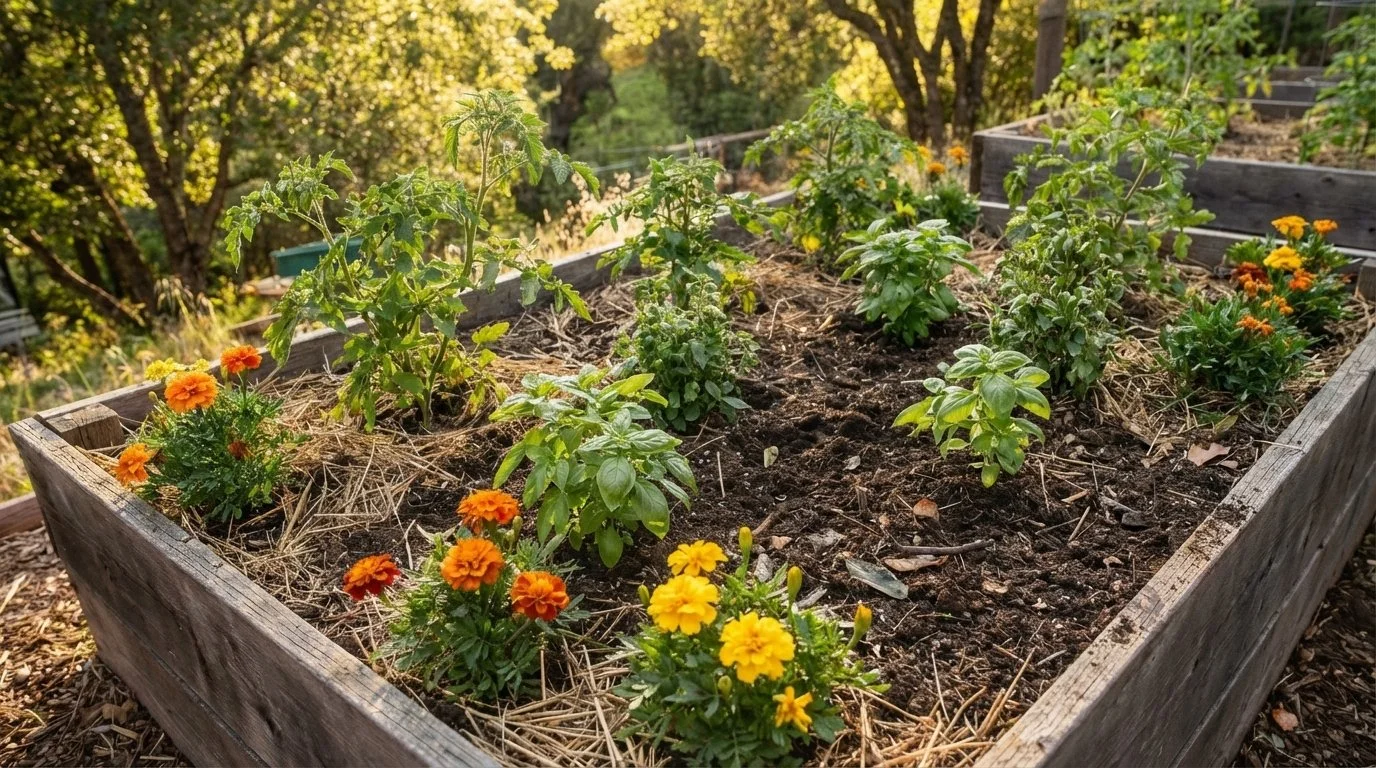
A companion-planting chart can make a vegetable bed look like a seating plan: tomatoes beside basil, marigolds at the corners, and no unfriendly neighbors. Some combinations do help. But a tidy chart can't tell you which pest is present, how much light the bed gets, or whether the plants will crowd each other by July.
The verdict: use the idea, then check the claim. Companion planting works best when you can name the job each plant is doing, such as feeding beneficial insects, providing support, or making use of space. A promise that one plant protects another from every pest deserves a closer look.
Why the charts are so convincing
There is something appealing about solving a garden problem with another plant. The Three Sisters combination of corn, beans, and squash also shows that growing crops together has a long history. That doesn't make every modern list of good and bad neighbors equally reliable. UC Master Gardeners of Contra Costa explain why many familiar companion-planting claims have little scientific evidence behind them.
Start with growing needs before you start matching names. In a sunny inland bed, a taller crop may provide useful afternoon shade. In a foggy coastal garden, that same shade may take away light the smaller crop needs. Leave room for mature plants and access for watering and harvest.
Marigolds: a specific use, not a pest shield
Certain marigolds can suppress some plant-parasitic nematodes. The important details are the marigold variety, the nematode species, and how the planting is managed. UC IPM describes the strongest effect from a solid planting grown for an entire season. A few marigolds tucked between vegetables generally provide poor nematode control.
That research is not evidence that a marigold border repels every above-ground insect. Nor is it a reason to treat every tired tomato as a nematode problem. Identify the cause of damage before choosing a remedy. Grow marigolds because you enjoy them, but don't hand them responsibility for protecting the whole bed.
Basil belongs with tomatoes on the plate
Basil and tomatoes are convenient crops to harvest together. Oregon State University Extension describes them as plants that grow well together and taste good together; it does not establish that neighboring basil makes a tomato's fruit taste better. Keep that distinction when reading a claim about improved flavor.
You can still plant both. Give the basil enough light and water, and avoid squeezing it beneath a tomato that will soon fill the space. An arrangement that is pleasant and useful does not need a flavor-changing explanation.
Give helpful insects something to eat
One better-supported approach is growing insectary plants: flowers that provide nectar, pollen, or shelter for predators and parasitoids. These insects can help manage crop pests. The benefit depends on the plants, their placement, and the rest of your garden care; more flowers do not guarantee a pest-free harvest.
A UC Davis report on sweet alyssum describes its use alongside lettuce to support hoverflies, whose larvae eat aphids. That's a more useful starting point than assuming every flower has the same effect. Choose locally suitable plants with flowering times and water needs that fit the bed, and leave space for them. Avoid pest-control practices that kill the natural enemies you are trying to support.
Beans are not an instant fertilizer supply
Legumes can contribute nitrogen as their residues break down. That is different from expecting a living bean plant to feed the tomato beside it on demand. Oregon State University Extension describes nitrogen becoming available over time as legume roots decay. Don't count a neighboring row of beans as a measured fertilizer dose for the current crop.
Try one useful change
For a Santa Cruz garden, a small flowering patch beside a vegetable bed is a manageable experiment. Sweet alyssum is one option where the site suits it. Watch both the crop and the insects over time. UC IPM notes that insectary benefits can fall off with distance and may not materialize in every situation.
If you need to exclude a particular insect, properly fitted physical row covers may be more dependable than a repellent-plant claim. Choose a cover suited to the crop and pest, check underneath it, and account for heat and any need for insect pollination. Companion planting belongs alongside observation and other controls.
This week: Pick one proposed pairing and write down the benefit you expect. Is it shade, support, an extra harvest, or food for beneficial insects? That one question makes a chart much easier to evaluate.
For help arranging the bed, find our free California Garden Planning Guide at Your Garden Toolkit.
Frequently Asked Questions
Should I avoid all companion-planting charts?
No. Use them for ideas, then check the explanation and the growing needs of both plants. A chart is most useful when it names a specific benefit and the conditions needed to get it.
Will marigolds protect my tomatoes from pests?
Not as a general shield. Their documented nematode-suppression use involves particular plants and growing methods, not simply a few flowers beside a tomato. Diagnose the pest before relying on a pairing.
What is a sensible first companion-planting experiment?
Try a small, suitable flowering planting near vegetables and watch for both pests and their natural enemies. Keep enough growing space for the crop and record what happens, including when there is no obvious benefit.
