

Growing Gboma Eggplant in Santa Cruz County: A Leafy Green You Haven't Tried
A few of the product links in this guide are affiliate links. If you buy through one, Ambitious Harvest may earn a small commission at no extra cost to you, which helps keep these guides free. We only point to gear we would use in our own Santa Cruz garden. As an Amazon Associate, we earn from qualifying purchases. Read our full disclosure.
Forget everything you know about eggplant. Gboma eggplant (Solanum macrocarpon) isn't grown for its fruit. It's grown for its leaves.
In West and Central Africa, where Gboma originates, the nutritious leaves are a dietary staple, cooked into stews, soups, and sauces. The small, bitter fruits are edible but secondary to the abundant, spinach-like greens the plant produces all summer long.
For Santa Cruz County gardeners looking for something genuinely different, Gboma offers an unfamiliar vegetable that's surprisingly easy to grow. It handles our mild temperatures better than tropical eggplants, produces continuously with regular harvesting, and introduces you to a cornerstone ingredient of African cuisine.
What Is Gboma Eggplant?
A Different Kind of Eggplant
Gboma (also called African eggplant, bitter tomato, or garden egg leaf) is Solanum macrocarpon, a distinct species from common eggplant (Solanum melongena). While related, they serve different culinary purposes.
Common eggplants are bred for large, meaty fruits. Gboma is bred for leaves. The plants produce small, round fruits (1 to 2 inches across) that are edible but quite bitter. In traditional African cooking, the fruits are sometimes used when very young or in dishes where bitterness is desirable, but the leaves are the primary harvest.
The Leaves
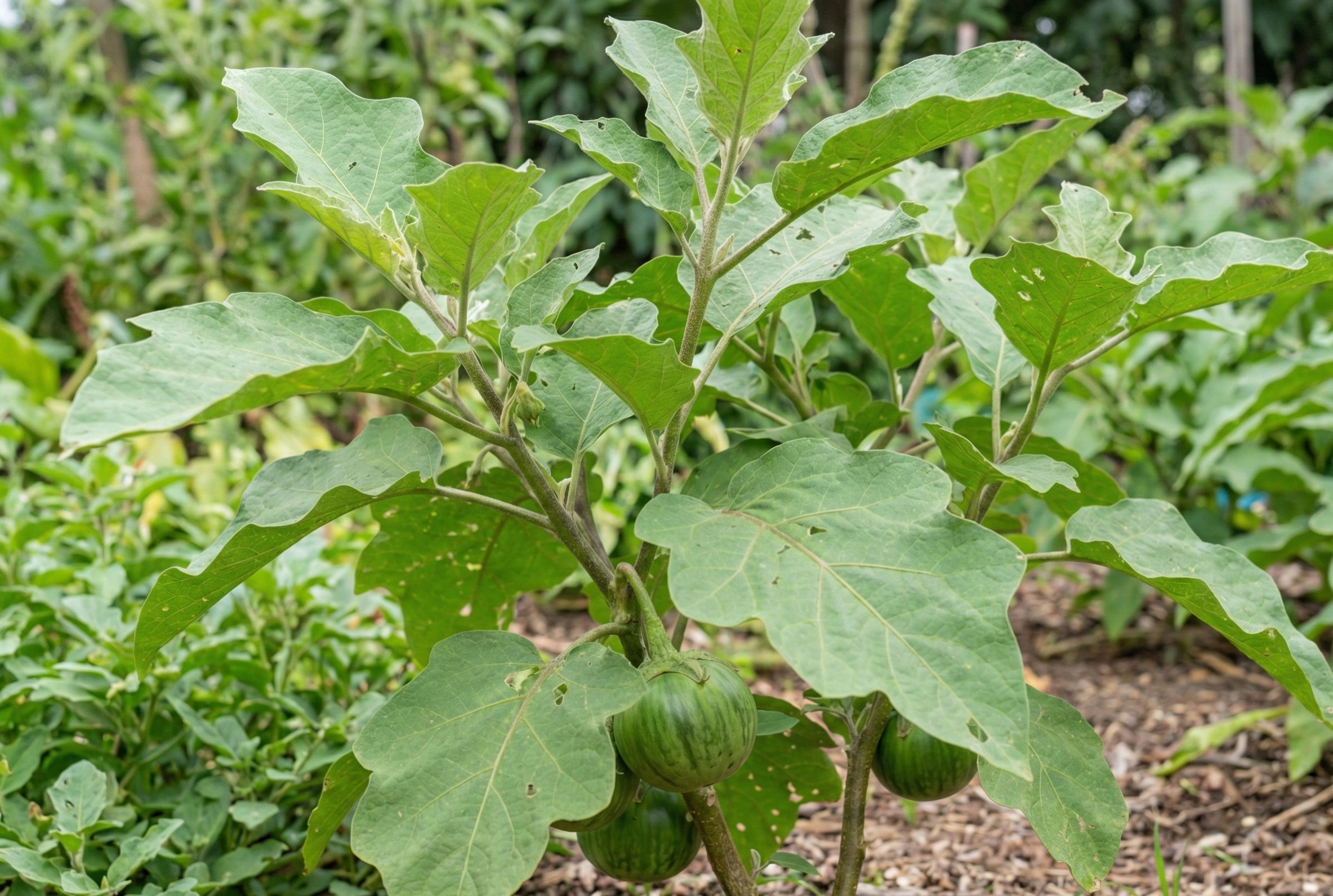
Gboma leaves are large (6 to 10 inches), slightly fuzzy, and grow abundantly on a bushy plant. The flavor is robust and slightly bitter, somewhere between spinach and a mild mustard green. The texture holds up well to cooking, making Gboma excellent in dishes that simmer for extended periods.
Nutritionally, Gboma leaves are impressive: high in protein for a leafy green, rich in calcium, iron, and vitamins A and C. In regions where they're dietary staples, Gboma leaves contribute significantly to nutrition.
The Plant
Gboma grows as a bushy, branching plant reaching 2 to 3 feet tall and wide. The foliage is dense and attractive, with a tropical appearance that makes it ornamental as well as edible.
In tropical climates, Gboma is perennial. In Santa Cruz County, it's grown as an annual, planted in late spring and harvested through fall. With protection, some gardeners have overwintered Gboma in mild coastal areas, but most treat it as a warm-season annual.
How Do You Grow Gboma in Santa Cruz County?
Climate Compatibility
Gboma's West African origins suggest it wants heat, and it does prefer warm weather. However, it's more tolerant of mild temperatures than many tropical vegetables.
Compared to common eggplant: Gboma is somewhat more forgiving of cool nights and produces earlier in our climate. While Italian eggplants may struggle to fruit in foggy areas, Gboma (which doesn't need to fruit for harvest) produces reliably.
Temperature preferences:
Ideal daytime: 75 to 85 degrees Fahrenheit
Tolerates: 65 to 90 degrees Fahrenheit
Growth slows: Below 60 degrees
Damaged or killed: Frost
These requirements are achievable in most of Santa Cruz County during our warm season. The UC IPM cultural tips for growing eggplant provide additional guidance on temperature and spacing for California conditions.
Microclimate Considerations
Coastal areas (Aptos, Capitola, Live Oak, Santa Cruz):
Gboma grows well on the coast, though production may be somewhat slower than inland. The focus on leaf harvest rather than fruit means cool nights are less problematic. Choose a warm, sheltered spot for best results.
Inland and sunny areas (Scotts Valley, Boulder Creek ridges, Watsonville):
Excellent conditions for Gboma. The warm days accelerate growth and leaf production.
Under redwoods:
The shade is challenging. Gboma prefers full sun, though it tolerates partial shade better than fruiting eggplants. Production will be reduced in shaded conditions.
Starting Gboma Eggplant
Finding Seeds
Gboma seeds aren't stocked at typical garden centers. You'll need to source them from specialty suppliers:
Baker Creek Heirloom Seeds occasionally stocks Gboma.
Kitazawa Seed Company specializes in Asian vegetables and sometimes carries African varieties.
Experimental Farm Network focuses on unusual edibles and may have Gboma.
African grocery stores sometimes sell seeds or may know local sources.
Online seed exchanges and specialty African vegetable suppliers are worth searching.
Seed Starting
Start seeds indoors 6 to 8 weeks before your planned transplant date. For a late May transplant, start seeds in late March or early April.
Germination requirements:
Temperature: 75 to 85 degrees Fahrenheit. Use a seedling heat mat.
Depth: 1/4 inch deep in quality seed starting mix.
Moisture: Keep consistently moist but not waterlogged.
Time: Germination takes 10 to 21 days at proper temperatures.
Light: Provide strong light immediately after germination. A sunny window may suffice, but grow lights produce sturdier seedlings.
Gboma seedlings grow moderately fast once established. Pot up to larger containers if roots become crowded before transplant time.
Transplanting and Growing
When to Transplant
Wait until nighttime temperatures are consistently above 50 degrees Fahrenheit and soil has warmed. In most of Santa Cruz County, this means late May or early June.
Hardening off is important: gradually expose seedlings to outdoor conditions over 7 to 10 days before transplanting.
Site Selection
Sun: Full sun (6 to 8 hours) for best production, though Gboma tolerates partial shade.
Soil: Well-draining, moderately fertile soil. Amend heavy clay with compost before planting.
Space: Allow 2 to 3 feet between plants. Gboma gets bushy.
Planting
Dig a hole slightly larger than the root ball. Set plants at the same depth they were in pots (unlike tomatoes, eggplants don't benefit from deep planting).
Water thoroughly after planting. Apply 2 to 3 inches of mulch around plants, keeping it away from stems.
Watering
Gboma needs consistent moisture for best leaf production. Water when the top inch of soil is dry. Inconsistent watering can cause leaves to become tough or bitter.
Drip irrigation works well and keeps foliage dry, reducing disease risk.
Fertilizing
As a leafy green, Gboma benefits from regular nitrogen. Side-dress with compost or a balanced organic fertilizer every 3 to 4 weeks during the growing season.
Fish emulsion or kelp applied every 2 weeks provides steady nutrition for continuous leaf production.
Support
Gboma plants become bushy and may benefit from staking or caging, especially in windy locations or when heavily loaded with foliage. A tomato cage provides adequate support for most plants. Gboma also grows well in large containers on patios and decks.
When Should You Harvest X?
When to Start
Begin harvesting leaves when plants are well-established with plenty of foliage, typically 6 to 8 weeks after transplanting. Don't harvest heavily from young, small plants; let them develop good root systems first.
How to Harvest
Pick individual leaves or cut entire young shoots. Harvest the newer, tender leaves near the growing tips. Older, lower leaves become tougher and more bitter.
Regular harvesting encourages continued production. Treat Gboma like cut-and-come-again lettuce: the more you pick, the more it grows.
Harvest Quantity
On an established, well-fertilized plant, you can harvest a generous handful of leaves weekly throughout the growing season. A few plants can supply a household with regular greens.
What About the Fruits?
Gboma produces small, round fruits that may be white, green, yellow, or orange depending on variety. These are edible but notably bitter, more so than any common eggplant.
If you want to try the fruits:
Harvest young, before they reach full size (about 1 inch diameter)
Young fruits are less bitter than mature ones
The bitterness can be reduced by salting and draining before cooking
Fruits are used in some traditional dishes where their bitter flavor is desired
Most growers focus on leaf harvest and either ignore the fruits or remove them to redirect energy to leaf production.
Cooking with Gboma Leaves
Preparation
Wash leaves thoroughly. Young, tender leaves can be used whole. Larger leaves may benefit from removing tough stems.
Unlike delicate greens, Gboma leaves hold up to long cooking and become more tender and flavorful with time.
Traditional Uses
In West African cuisine, Gboma leaves are essential in:
Stews and soups: Simmered with meat, fish, tomatoes, onions, and peppers. The leaves cook down similar to collards or chard.
Sauce leaves: Blended or finely chopped into sauces served over rice or fufu.
Vegetable stews: Combined with other vegetables and palm oil.
Cooking Methods
Sautéed: Quick sauté with garlic, onion, and a splash of stock. Add a bit of palm oil or coconut oil for authenticity.
Simmered in stews: Add to stews during the last 20 to 30 minutes of cooking. Leaves become tender but hold their shape.
Blended sauces: Cook leaves with onion and tomato until soft, then blend into a thick sauce.
Substitute for other greens: Use anywhere you'd use chard, collards, or callaloo. Adjust for Gboma's slightly more bitter flavor.
Flavor Pairings
Gboma's robust flavor pairs well with:
Rich proteins (goat, lamb, smoked fish, palm oil)
Tomatoes and peppers
Onions and garlic
Palm oil or peanut oil
Fermented locust beans or other umami-rich ingredients
Coconut milk to balance bitterness
The slight bitterness is a feature, not a bug, and balances rich, savory dishes.
Comparing Gboma to Other Greens
Advantages of Gboma
Heat tolerance: Produces through summer when lettuce and spinach have bolted.
Continuous harvest: Unlike one-and-done crops, Gboma produces for months with regular picking.
Nutritional density: Higher protein than most greens, excellent mineral content.
Pest resistance: Fewer pest problems than many brassica greens.
Unique flavor: Adds variety to the garden and kitchen.
Comparison to Similar Crops
Collards/kale: Similar cooking uses, but Gboma tolerates heat better and has more compact growth.
Swiss chard: Similar ease of growing, but Gboma offers different flavor profile and cultural significance.
Spinach: Spinach bolts in heat; Gboma thrives in it.
Callaloo (amaranth): Similar role in Caribbean/African cooking. Both are worth growing; they complement rather than replace each other.
What Are the Most Common Problems?
Slow Early Growth
Gboma, like all eggplants, starts slowly in cool conditions. If growth seems stalled, ensure soil is warm and plants are in the warmest spot available. Growth accelerates once temperatures rise.
Pests
Flea beetles: Small jumping beetles that create tiny holes in leaves. Floating row cover prevents infestation. Established plants tolerate moderate damage.
Aphids: Check undersides of leaves. Spray off with water or use insecticidal soap.
Spider mites: More common in hot, dry conditions. Increase humidity around plants; spray undersides of leaves with water. For detailed pest identification and organic controls, see the UC IPM eggplant pest management guide.
Bitter Leaves
Some bitterness is normal and characteristic of Gboma. Excessive bitterness can result from:
Water stress (keep soil consistently moist)
Old, mature leaves (harvest young, tender growth)
Hot, dry conditions (mulch and water consistently)
Flowering and Fruiting
Gboma naturally flowers and fruits as the season progresses. If you're focused on leaf production, you can pinch off flowers to redirect energy to foliage. However, some flowering doesn't significantly reduce leaf quality.
Local Resources
Seeds
Finding Gboma seeds requires specialty sources. Try:
African grocery stores in San Jose and the Bay Area may stock seeds or know local sources.
Education
UC Master Gardeners of Monterey and Santa Cruz Counties can answer questions about growing unusual vegetables.
The Cabrillo College Horticulture program sometimes grows unusual edibles and welcomes questions.
Cultural Resources
For authentic recipes and cultural context, look for West African cookbooks or online resources featuring Nigerian, Ghanaian, and other West African cuisines where Gboma is a traditional ingredient.
Frequently Asked Questions About Growing Gboma Eggplant
Is Gboma really grown for leaves, not fruit?
Yes. Unlike common eggplants bred for large fruits, Gboma is bred and grown primarily for its nutritious leaves. The small fruits are edible but quite bitter. In West and Central Africa where Gboma originates, the leaves are a dietary staple cooked into stews and sauces. The fruits are sometimes used young when bitterness is less intense.
How does Gboma compare to spinach or chard?
Gboma has a more robust, slightly bitter flavor compared to mild spinach. It's closer to chard or collards in cooking use. The major advantage is heat tolerance: while spinach bolts in summer, Gboma thrives and produces continuously through the warm season. Nutritionally, Gboma is higher in protein than most leafy greens.
Can I grow Gboma in foggy coastal areas?
Yes. While Gboma prefers warm weather, it's grown for leaves rather than fruit, which makes it more forgiving of cool conditions than fruiting eggplants. Growth may be slower on the coast, but plants still produce harvestable leaves. Choose your warmest, most protected spot for best results.
Where can I find Gboma seeds?
Gboma seeds aren't sold at typical garden centers. Try specialty seed companies like Baker Creek Heirloom Seeds, Kitazawa Seed Company, or Experimental Farm Network. African grocery stores sometimes sell seeds or know local sources. Online seed exchanges are another option.
How do I cook Gboma leaves?
Gboma leaves hold up well to cooking and become tender with time. Sauté with garlic and onion, simmer in stews for 20 to 30 minutes, or blend into thick sauces. They're traditional in West African dishes served over rice or fufu. The slight bitterness pairs well with rich proteins, tomatoes, and palm oil.
Can I grow Gboma as a perennial in Santa Cruz County?
Gboma is perennial in tropical climates but frost-sensitive. In mild coastal areas, some gardeners have overwintered plants with protection, but most treat Gboma as a warm-season annual. Starting fresh each year from seed is the most reliable approach.
How often can I harvest leaves?
Once plants are established (6 to 8 weeks after transplanting), you can harvest a generous handful of leaves weekly from each plant. Regular harvesting encourages continued production. Always leave enough foliage for the plant to continue growing; never strip a plant completely.
Should I remove the flowers to get more leaves?
You can pinch off flowers to redirect energy to leaf production, but it's not essential. Some flowering doesn't significantly reduce leaf quality or quantity. If maximum leaf production is your goal and plants are flowering heavily, removing some flowers may help.
Free Gardening Resources
Getting Started
Beginner Garden Setup Checklist - Complete setup guide to start your garden right.
Know Your Microclimate Worksheet - Understand your local conditions before planting.
Planning & Timing
Seasonal Planting Calendar - Avoid timing mistakes with month-by-month guidance.
Vegetables by Season Chart - Quick reference for what to plant and when in Santa Cruz County.
Seasonal Garden Tasks Checklist - Stay on track with monthly garden maintenance tasks.
Growing Guides
Companion Planting Guide - Learn which plants grow better together and which to keep apart.
Tomato Variety Selector - Find the best tomato varieties for your Santa Cruz microclimate.
Problem Solving
Garden Troubleshooting Guide - Diagnose common problems before they become disasters.
Gopher Control Guide - Humane and effective strategies for managing gophers in your garden.
Santa Cruz-Specific Guides
Water-Wise Gardening Guide - Conserve water while keeping your garden thriving through dry seasons.
Something Different for Your Garden
Growing Gboma eggplant connects you to culinary traditions unfamiliar to most American gardeners. It's a chance to grow something genuinely novel, to learn new cooking techniques, and to add diversity to both your garden and your table.
The practical benefits are real too: a reliable heat-tolerant leafy green that produces all summer, requires less space than many greens, and offers impressive nutrition. But beyond practicality, there's value in growing vegetables that expand your horizons.
Start with a few plants this year. Learn to cook the leaves in traditional ways or adapt them to your own cooking style. You'll have a summer's worth of greens and a new vegetable in your repertoire.
