

Asparagus Growth Stages: The Perennial Life Cycle
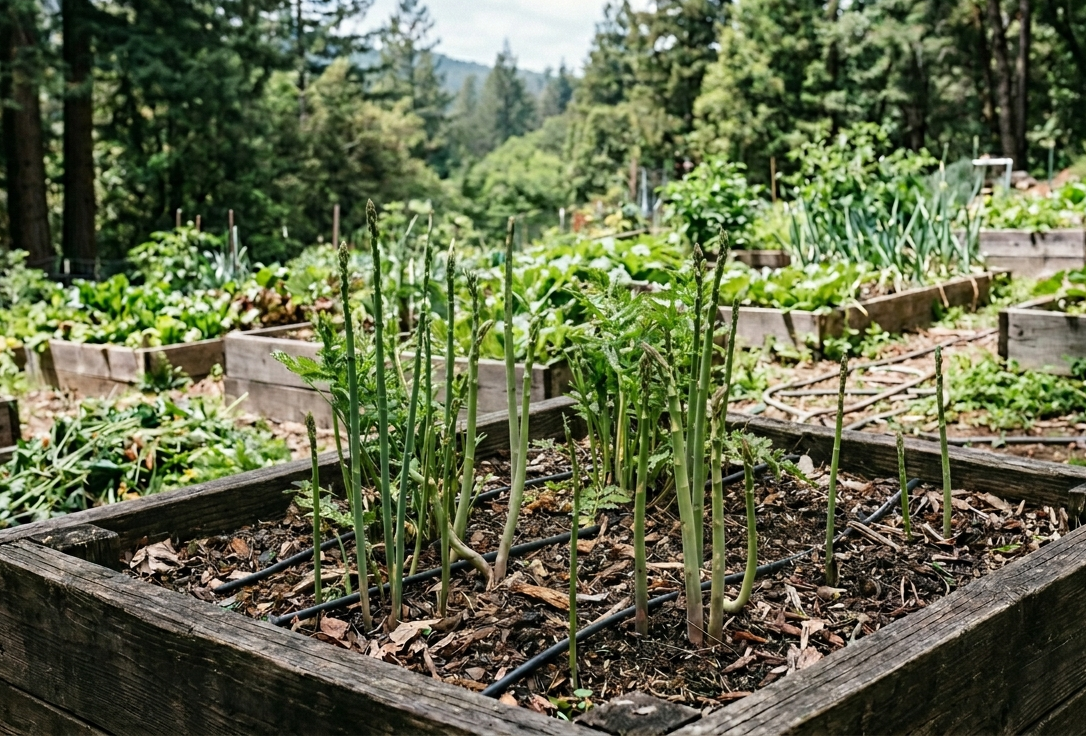
Asparagus is one of the few vegetables you plant once and harvest from for decades. That long horizon is exactly why the early years matter so much. The asparagus growth stages follow a slow, deliberate rhythm: you spend the first two or three years building an underground crown, and only after that does the bed start paying you back with spears each spring. Understanding the asparagus life cycle helps you make the single most important decision a new grower faces, which is when to keep your hands off the harvest knife.
In California, asparagus does especially well. Mild winters give the crowns the short rest they need, and the long, sunny seasons let the ferns build deep energy reserves. The catch is patience. This guide walks through every stage of the plant's life, from a dormant crown in a furrow to a productive bed twenty years on, so you know what to expect and what to do at each point.
How Do You Start Asparagus, From Crowns or Seed?
You can begin asparagus two ways, and the choice sets your timeline for the next few years.
Planting crowns is the most common approach for home gardeners. A crown is a one-year-old root system, a spidery mass of fleshy roots with a central bud cluster. Crowns give you a head start because that first year of growth has already happened in the nursery. Plant one-year-old crowns rather than older ones, which transplant poorly. Dig a furrow and set the crowns in the bottom, spacing them about a foot apart within the row and roughly five feet between rows. Furrow depth depends on your soil. In sandy soil, dig deeper, around six to eight inches; in heavy clay, plant shallower, closer to four inches, since deep planting in cold, wet clay invites rot. Cover the crowns with just two to three inches of soil at first, then gradually fill the furrow over the summer as the spears grow up toward the light.
Starting from seed is cheaper but adds a full year to the wait. Sow seed about one inch deep, then grow the seedlings out before transplanting them to their permanent bed. Because seed-started beds spend their first season as small transplants, they reach harvest size one year later than crown-planted beds.
Either way, choose your site carefully. An asparagus bed will live in the same spot for fifteen to twenty years or more, so pick a sunny, well-drained location where you will not need to dig or till later.
Why Should You Not Fully Harvest in Years One Through Three?
This is the rule that trips up nearly every new asparagus grower, and it is worth understanding rather than just obeying.
When a spear emerges, it is drawing on energy stored in the crown below. If you cut that spear, the plant loses the chance to turn it into fern and pay that energy back. In a young plant, the crown has not yet built up enough reserves to survive repeated withdrawals. Harvest too hard in the first years and you starve the crown, weaken the root system, and end up with a thin, short-lived bed.
So the early years are about building, not taking. The standard extension guidance is to skip harvest entirely the first year after planting crowns and let every spear grow into fern. In the second year (the first harvest year for crowns), pick lightly, for only about two weeks. In the third year, harvest for three to four weeks. By the fourth season the bed is established and you can move to a full window. Seed-started beds shift this whole schedule back by one year, since they begin a season behind.
It feels like a long wait, but every spear you let stand in those early years becomes fuel for a stronger crown and bigger harvests later.
What Happens During Spear Emergence?
Spear emergence is the stage most people picture when they think of asparagus. It is the visible, edible expression of everything the crown has stored underground.
Emergence is triggered by soil temperature, not air temperature. Spears begin to push up once the soil warms to around 50 degrees Fahrenheit, with buds often breaking within ten to twelve days as the soil moves through the 45 to 50 degree range. In much of California's mild climate, that can mean an early start to the season compared to colder regions.
Once they get going, spears grow fast. During the peak of the season they can stretch as much as two inches a day in warm weather. You harvest them while they are still tight and tender, typically when they reach six to eight inches tall and are about as thick as your little finger, with the tips still closed and compact. Cut or snap them at or just below the soil line. If you wait too long, the tip loosens and ferns out, and the spear turns woody. During the harvest window, you may be cutting every day or two because of how quickly they grow.
Why Does Fern Growth Matter So Much for the Crown?
If spears are the harvest, ferns are the engine. This is the stage that powers everything else, and it is the reason the harvest window has to close.
When you stop cutting and let spears stand, they open into tall, feathery, fern-like foliage. Mature ferns can reach six to eight feet, so plan to put your bed where that height will not shade other crops. This foliage is the plant's solar panel. Through photosynthesis it produces carbohydrates and sends them down into the fleshy roots and crown, rebuilding the reserves that next spring's spears will draw on.
That is why you never cut the ferns while they are green and working. Removing healthy fern in summer or early fall robs the crown of the energy it is busy storing and directly cuts into next year's harvest. The fern stage is also why harvest has to end on a date rather than running all summer. Once you stop cutting, usually by late June or early July depending on your bed's age, you are handing the rest of the season over to the ferns so they can recharge the crown.
What About Flowering, Berries, and Male Versus Female Plants?
Asparagus is dioecious, meaning individual plants are either male or female. The difference matters more than you might expect.
During the fern stage, plants produce small, bell-shaped flowers. Female plants that have been pollinated then set red berries in summer, each holding seed. Those berries look pretty, but they represent energy the plant spent on reproduction rather than on storing reserves or producing spears. Female plants also drop their berries, which sprout into seedling volunteers that crowd the bed.
Male plants do not produce berries. They tend to put out a greater number of spears, emerge a little earlier in spring, and often live longer. For all those reasons, many modern hybrid varieties are bred to be all-male, and these are generally the better choice for a productive home bed. If you grow an older mixed variety and see red berries, you have female plants, and you may want to thin them out or simply pull the volunteer seedlings they create.
What Does the Dormancy Stage Look Like?
After a full season of fern growth, the plant prepares to rest. Dormancy is the quiet stage that closes each year's cycle.
As the weather cools, the ferns finish moving their stored carbohydrates down into the roots, then begin to yellow and brown. In colder regions a hard frost kills the top growth outright. In California's milder areas the ferns may simply senesce and turn brown on their own as the season winds down. Either way, the right move is the same: wait until the foliage has clearly turned brown and died back before cutting it down. Cutting green fern early is the most common mistake at this stage.
Once the fern is brown and spent, cut it back to a couple of inches above the ground and clear the old growth away, since spent fern can harbor pests and disease over winter. A layer of mulch over the dormant crowns protects them through the cold months. The crown then sits dormant underground, fully charged, waiting for the soil to warm again and start the whole cycle over.
How Long Is the Harvest Window Once the Bed Is Established?
Once your bed reaches full maturity, usually by the fourth growing season, the harvest window opens up considerably.
An established bed supports a harvest of roughly six to eight weeks each spring. You start cutting when the first spears reach six to eight inches and keep harvesting as new spears push up, often daily during the peak. The window closes in early summer, commonly around late June to mid-July depending on your region and the vigor of the bed.
The signal to stop is the spears themselves. As the harvest season runs on, the spears you cut get noticeably thinner. When most of the new spears come up pencil-thin, the crown is telling you its reserves are running low. That is your cue to stop cutting and let everything grow into fern for the rest of the season. Pushing harvest past that point, or cutting straight through the summer, drains the crown and shortens the productive life of the whole bed.
How Many Years Will an Asparagus Bed Stay Productive?
This is the payoff for all the early patience. A well-sited, well-cared-for asparagus bed is a long-term resident of your garden.
Extension sources put the productive lifespan at fifteen to twenty years, and a healthy bed can keep producing beyond twenty. That longevity rests entirely on how you treated the bed in its early years and how faithfully you honor the fern stage each season. Beds that were harvested too hard while young, or cut down while their fern was still green, decline and thin out far sooner.
Across those years the bed follows a predictable arc. The first three or four seasons are establishment. The bed then settles into its prime, with full six-to-eight-week harvests, for many years. Eventually, often after a decade or two, you may notice spears thinning and yields slipping as the crowns age. When that happens, it is usually time to start a new bed in a fresh spot. Because asparagus lives so long in one place, a little planning at the start returns years of low-effort harvests.
What Is the Stage-by-Stage Asparagus Timeline?
It helps to see the life cycle on two scales: across years as the bed matures, and within a single season once it is established.
By year (crown-planted bed):
Year 1: Plant crowns. Do not harvest. Let every spear become fern to build the crown.
Year 2 (first harvest year): Harvest lightly, about two weeks, then let the rest grow to fern.
Year 3: Harvest about three to four weeks, then let ferns grow.
Year 4 and beyond: Full harvest window of roughly six to eight weeks each spring.
Years 15 to 20+: Continued production from a mature bed; eventually yields decline and the bed is replaced.
Seed-started beds shift each of these steps back by one year.
Within a single season (established bed):
Early spring: Soil warms to about 50 degrees; spears emerge and grow rapidly.
Spring into early summer: Six-to-eight-week harvest window; cut spears at six to eight inches.
Early summer: Spears thin out; stop harvesting and let spears grow.
Summer into fall: Ferns grow tall, photosynthesize, and recharge the crown.
Fall into winter: Ferns yellow, brown, and die back; cut down spent fern and mulch.
Winter: Crown rests dormant underground until soil warms again.
How Do You Care for Asparagus at Each Stage?
Each stage of the life cycle asks for something slightly different from you.
At planting and establishment, focus on the foundation. Choose a sunny, well-drained site, work in plenty of organic matter, and plant at the right depth for your soil. Keep young beds well watered and feed them so the ferns grow vigorously, since that early fern growth is what builds the crown. Keep weeds down, because young asparagus competes poorly.
During the harvest window, cut spears promptly and regularly at six to eight inches so you catch them before they fern out. Keep the bed weeded and watered. Watch the spear thickness as your signal for when to stop.
During the fern stage, the main job is restraint: leave the ferns alone to do their work. Keep the bed irrigated through summer so the foliage stays healthy and productive, and keep weeds from overtaking the planting.
At dormancy, wait for the fern to brown completely, then cut it down to a couple of inches and remove the debris to reduce overwintering pests and disease. Mulch the crowns for protection, and you are set for the next cycle.
What Common Problems Affect Asparagus?
Asparagus is fairly tough once established, but a handful of pests, diseases, and growing mistakes show up often enough to know about.
Asparagus beetles are the most common pest. Both the common asparagus beetle and the spotted asparagus beetle chew on spears and ferns, scarring spear tips and weakening fern growth. Hand-picking and keeping the bed clean of old fern over winter help control them. Cutworms and aphids can also appear.
Asparagus rust shows up as light, oval lesions on the ferns and can reduce the foliage's ability to feed the crown. Purple spot causes purplish lesions on spears and ferns. Both are worse in wet conditions; spacing for airflow and removing spent fern reduce the risk.
Fusarium crown and root rot is the disease most likely to kill a bed outright. It thrives in poorly drained, low-pH soils, which is exactly why site selection and drainage matter so much at planting. There is no easy cure once a bed is infected, so prevention through good soil and one-year-old healthy crowns is your best defense.
The most common grower mistakes are not diseases at all: harvesting too aggressively in the early years, and cutting the ferns down while they are still green. Both drain the crown and shorten the life of the bed. If your established bed is producing only thin, spindly spears, it is usually a sign the crown is overworked and underfed, often from one of those two mistakes.
Keep growing: see Garlic growth stages and Onion growth stages.
Frequently Asked Questions
Can I harvest any asparagus the first year after planting crowns?
No. The first year after planting crowns, let every spear grow into fern without cutting. The crown has not yet stored enough energy to recover from harvest, and cutting now weakens the bed for years to come. Light harvesting begins in the second year, for only about two weeks, then expands gradually after that.
Why do my asparagus spears get thin later in the season?
Thinning spears are normal and are the plant's signal that the crown's stored energy is running low. When most new spears come up pencil-thin, stop harvesting and let everything grow into fern so the crown can recharge. If your spears are thin from the very start of the season, the crown may be overworked from past over-harvesting or from ferns being cut down too early.
Should I grow male or female asparagus plants?
Male plants are generally the better choice. They produce more spears, emerge a little earlier, often live longer, and do not set the red berries that drain energy and create weedy volunteer seedlings. Many modern hybrid varieties are all-male for exactly these reasons. The red berries you sometimes see in summer come from female plants.
When should I cut back asparagus ferns?
Wait until the ferns have turned brown and died back completely, which happens in late fall or winter as the weather cools or after a frost. Only then should you cut them down to a couple of inches and clear the debris. Cutting green, healthy ferns is one of the most common asparagus mistakes, because it stops the plant from storing the energy that fuels next spring's spears.
